

Hedge funds do not share a single GPA requirement for quant candidates; the requirement that matters is the one stated for the specific role. For your 2026 applications, distinguish a mandatory minimum from a preferred qualification, and do not treat meeting either as proof that you are ready for the technical interview.
- What GPA do hedge funds expect? Follow the specific posting, not an unsupported industry-wide cutoff.
- A required GPA and a preferred GPA are different application conditions; read the wording carefully.
- Report cumulative GPA, major GPA, and grading scales accurately; never substitute one for another.
- QuantMinds provides quant finance career coaching for candidates seeking resume review and interview preparation.
What GPA do hedge funds expect from quant candidates?
Use the employer’s stated requirement, not a number borrowed from another fund, internship, or degree program. A posting that requires a minimum GPA gives you an explicit eligibility condition. A posting that describes strong academic performance without a number does not give you a numerical cutoff to reverse-engineer.
Start with this distinction before deciding whether to apply:
| What the application says | What it establishes | Your next move | What it does not establish |
|---|---|---|---|
| A minimum GPA is required | An explicit academic condition | Check your transcript against the stated measure and scale | That meeting the minimum guarantees an interview |
| A GPA is preferred | A stated preference rather than an explicit requirement | Assess the rest of your relevant evidence | That the preference is irrelevant |
| Academic excellence is requested without a number | A qualitative academic expectation | Show relevant coursework and documented achievements | A numerical cutoff |
| No GPA requirement is listed | No published GPA condition in that posting | Follow the application instructions and prepare role-specific evidence | That academic history will never be considered |
If your concern is a weaker academic record, read the guide to whether a low GPA is a dealbreaker for quant finance jobs. The practical question is not whether your transcript is perfect. It is whether you meet the stated conditions and can demonstrate the skills the position asks for.
Why this matters
A GPA question can become an excuse to delay the work you control. You spend time searching for an unofficial cutoff while your resume still fails to explain your research, your code, or your contribution to a project.
For a 2026 search, separate eligibility, application evidence, and interview readiness. These are different problems. A strong transcript does not explain a poorly written project bullet, and a polished resume does not demonstrate that you can solve a technical problem aloud.
Keep the distinctions visible in your application tracker. Record the academic wording exactly, then identify the evidence you have for the remaining requirements. That approach gives you a decision you can act on instead of a verdict about your entire career.
Quant research: connect academic results to research evidence
For a quant research application, make your academic record interpretable alongside your research work. Relevant mathematical and statistical coursework can explain your preparation, but course names alone do not show how you approach an uncertain problem.
Best for research candidates: present a project you can defend from question to conclusion. Describe the problem, the data, the method, the validation approach, and the limitations. Distinguish your contribution from the work of a supervisor or team.
The strength of this approach is specificity: a reader can see what you actually did. Its limitation is equally important: a project does not change your GPA or cancel a mandatory academic requirement.
Avoid presenting a model’s apparent success as sufficient evidence. Be ready to discuss why you chose the method, what assumptions you made, and where the analysis breaks down. A concise explanation of a failed approach can be more informative than an unexplained result.
Quant trading: prepare reasoning, not a defense of your transcript
For a quant trading application, follow the position’s stated academic requirements and preparation instructions. Do not assume that a research role’s requirements describe a trading role, even when both sit within quantitative finance.
Best for trading candidates: practice making your reasoning understandable under questioning. When working through probability or decision problems, state your assumptions, explain your method, and check whether the result makes sense. Correct an error directly rather than talking around it.
This preparation gives you evidence of how you think. It does not establish that a particular employer will overlook grades, and it should not replace any assessment preparation the employer explicitly requests.
Keep your resume consistent with what you can explain. If you list a probability course or trading project, expect to discuss its substance rather than relying on the title to carry the application.
Quant development: show what you built and why
For quant development applications, connect your experience to the engineering requirements in the posting. Describe the software you built, the decisions you owned, and how you checked that the implementation worked.
Best for development candidates: present inspectable engineering work that matches the role. Clear code, tests, documentation, and an explanation of design trade-offs make a project easier to evaluate. Label personal, academic, and professional work accurately.
The advantage is that your application contains evidence beyond a transcript. The limitation is that a repository does not speak for itself: unexplained code leaves the reader to reconstruct your contribution and purpose.
Do not add performance figures you did not measure. If you claim an improvement, be ready to explain the baseline, the measurement method, and the conditions of the comparison. Otherwise, describe the implementation without attaching a number.
Why GPA expectations vary by application
There is no useful shortcut from a general recruiting discussion to the requirements of your particular application. Read these factors directly from the posting and form rather than assuming how a fund handles them:
- Requirement wording: Required, preferred, and unspecified academic criteria call for different decisions.
- Role scope: Research, trading, and development postings ask for different forms of technical evidence.
- Career stage: An internship application and an experienced-hire application can request different information.
- Academic measure: Cumulative GPA, major GPA, and graduate GPA describe different records.
- Grading system: A GPA is not interpretable without its scale and institutional context.
In 2026, save the posting alongside your application notes. Requirements belong to a particular opening; a remembered statement from another recruiting cycle is not a substitute for the current instructions.
How should you handle GPA on a quant resume?
Report the academic measure you name, on the scale your institution uses. If you include cumulative GPA, use the cumulative figure on your official record. If you include major GPA, label it as major GPA and confirm how your institution defines it.
Do not replace a requested cumulative figure with a stronger major figure. Those are different measures, not interchangeable descriptions of the same result. The same rule applies when you have separate undergraduate and graduate records.
If your institution does not issue a GPA, state the grading system accurately. Do not invent a conversion because an application uses unfamiliar fields; follow the employer’s conversion instructions or ask how to report your result.
When GPA is optional, decide what belongs on the resume based on relevance and space. Optional omission is different from withholding information that an application explicitly requests. Your resume and application form must remain consistent wherever they describe the same record.
What should you do before applying?
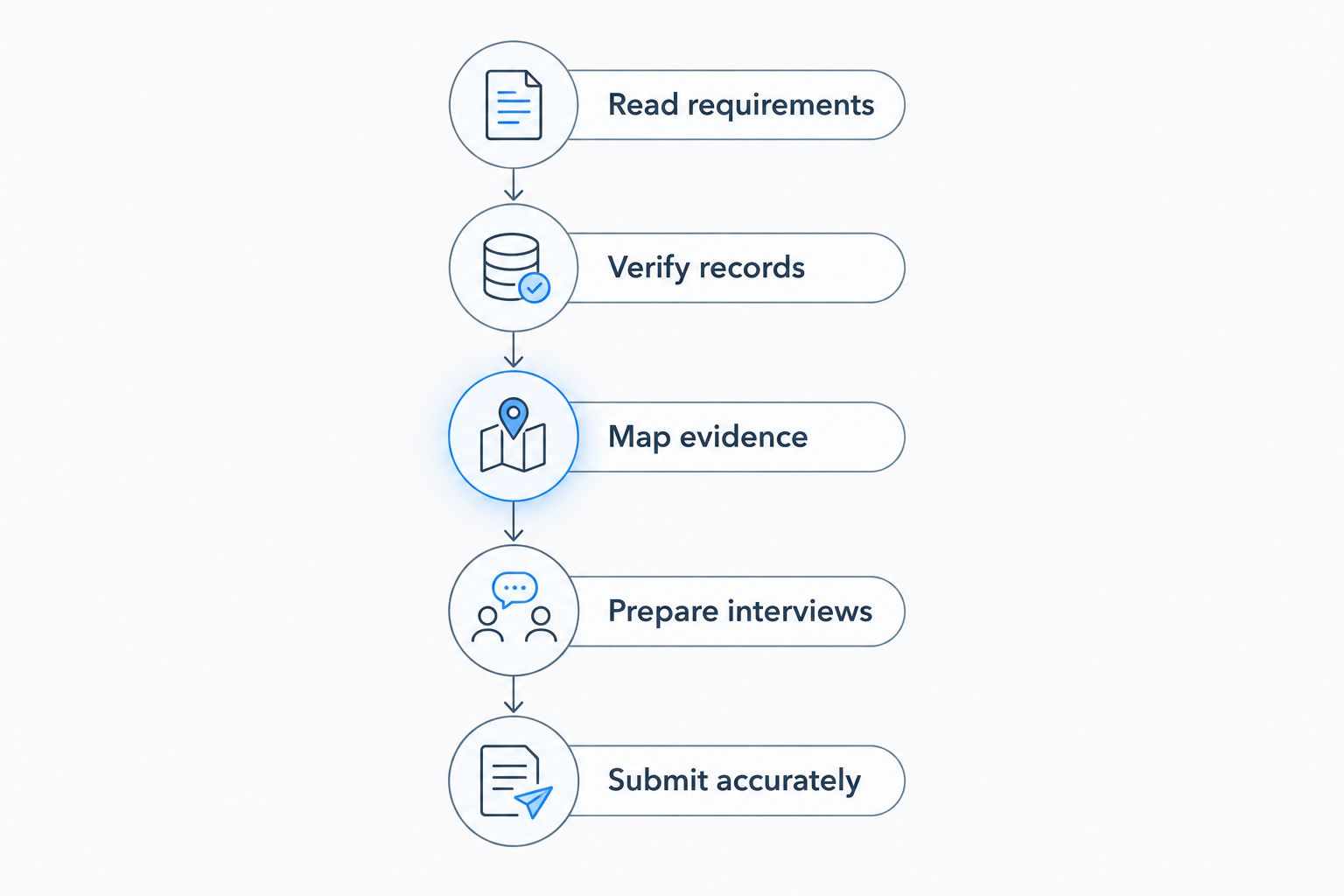
Use this sequence to turn a GPA concern into a concrete application decision. The goal is an accurate submission supported by evidence, not a clever way around a stated requirement.
- Read requirements. Identify academic conditions, degree requirements, technical skills, and any instructions about transcripts.
- Verify records. Check the exact academic figure, its label, and its grading scale against your official record.
- Map evidence. Match relevant coursework, research, software, and experience to the position’s requirements.
- Prepare interviews. Practice explaining the evidence you put on the resume and solving the problems relevant to the role.
- Submit accurately. Answer required fields truthfully and review the application for contradictions.
If the wording is ambiguous, ask a narrow question about eligibility or reporting. Give the recruiter the relevant grading context and identify the unclear instruction. Do not ask for a prediction of your chances from GPA alone.
Can a strong project compensate for a lower GPA?
A strong project provides additional evidence; it does not erase a lower GPA or override a mandatory minimum. Use projects to demonstrate relevant work where the application permits a broader evaluation of your background.
Make the project easy to assess. Explain your objective, your contribution, your method, and the limits of the result. A repository link or project name without that explanation leaves essential questions unanswered.
Should you explain a low GPA in your application?
Explain a low GPA when the application asks for context or when a brief factual explanation is necessary to understand your record. Keep the explanation proportionate and move to evidence of your current preparation.
Do not write a long apology or describe yourself as academically weak. State the relevant circumstance accurately, avoid unnecessary personal disclosure, and identify subsequent work that demonstrates the skills needed for the role.
Does a strong graduate GPA replace an undergraduate GPA?
A strong graduate GPA is a separate academic result, not a replacement for your undergraduate GPA. Report each record when requested and identify the degree and institution associated with it.
Graduate study can add coursework and research evidence to your application. It does not justify hiding a requested undergraduate record or assuming that an employer has a particular policy about how the records are weighted.
When individualized application feedback makes sense
QuantMinds is best for quant candidates seeking individualized resume review and interview preparation. Its quant finance career coaching includes resume review, interview prep, and one-on-one coaching for professionals and students targeting quantitative research, trading, and development roles.
QuantMinds was founded by a former UC Berkeley MFE program executive director. That background is relevant when you want help presenting academic preparation and career goals, rather than another generic list of resume tips.
The boundary is clear: coaching does not change your transcript or an employer’s eligibility rules. Bring the actual posting and your academic record to a discussion with QuantMinds, so the application question stays specific.
FAQ
What GPA do hedge funds expect in 2026?
Use the GPA requirement stated for the specific hedge fund role; there is no shared requirement across all quant openings. Distinguish a mandatory minimum from a preferred qualification before deciding whether to apply.
Can I apply if my GPA is below the preferred requirement?
A preferred GPA is not the same wording as a mandatory minimum. Assess your relevant evidence and follow all required application instructions without assuming the preference will be ignored.
Should I leave GPA off my quant resume?
You can omit GPA from a resume when it is optional, but you must provide it wherever the application requires it. Keep every academic figure you report accurate and consistently labelled.
Can I list my major GPA instead of my cumulative GPA?
Do not substitute major GPA when the employer requests cumulative GPA. If you include major GPA separately, label it explicitly and use your institution’s definition.
Does a high GPA guarantee a quant interview?
A high GPA does not guarantee a quant interview. Meeting an academic requirement is distinct from demonstrating the technical skills and experience requested for the role.
How should international students report grades?
Report grades on the institution’s original scale unless the employer requests a specific conversion. If the form cannot accommodate that scale, ask how to enter the result rather than inventing a GPA.
Can career coaching get around a hedge fund’s GPA requirement?
Career coaching cannot change a mandatory GPA requirement. It can help you present relevant experience and prepare to explain the work included in your application.
One last thing
The label beside your GPA matters as much as the figure. A correctly calculated major GPA becomes misleading if you present it as cumulative GPA; a graduate result becomes ambiguous if you leave out the degree it belongs to.
Before submitting a 2026 application, check every academic entry against your transcript. Then spend your preparation time on the evidence and explanations the role requires, not on searching for an unofficial number that promises certainty.