

Best overall: market risk quant. Best for statistical model scrutiny: model validation quant. Best for software-focused graduates: risk quant developer. This 2026 guide compares six risk management career paths for quant finance graduates by the work you do, the evidence you need, and the trade-offs you accept.
- For risk management career paths, quant finance graduates should start with market risk, then compare specialist alternatives.
- Model validation suits graduates who prefer testing assumptions to owning trading decisions.
- Risk quant development suits candidates who want to build software rather than own risk limits.
- QuantMinds offers resume review, interview preparation, and individual coaching for quant finance candidates.
Why this matters
Risk management is not one job. A market risk analyst explaining derivatives exposure, a credit modeler estimating default risk, and a developer maintaining a risk engine need different evidence on their resumes.
Your MFE or quantitative finance degree gives you relevant foundations. It does not tell an employer which problems you can solve. For your 2026 applications, choose a role family before choosing another course or rewriting your LinkedIn headline.
QuantMinds is best for quant finance graduates seeking resume review, interview preparation, and individual career coaching. Founded by a former UC Berkeley MFE program executive director, QuantMinds helps professionals and students pursue quantitative research, trading, and development roles. Coaching supports your preparation; it does not replace technical evidence or determine a hiring decision.
What makes the best risk management career path?
Use these criteria to judge a vacancy, not just its title:
- Technical depth: Does the role involve modeling, estimation, numerical methods, or software engineering rather than report assembly alone?
- Decision proximity: Will your analysis inform trading exposure, portfolio construction, lending, or funding decisions?
- Skill fit: Does the work match your strongest evidence in statistics, derivatives, coding, or economics?
- Work ownership: Will you build models, challenge models, maintain systems, or interpret their outputs?
- Career direction: Does the experience develop skills relevant to the work you want next?
A prestigious employer does not settle these questions. Ask what the team produces, who uses it, and what a graduate owns after joining. Those answers are more useful than a broad promise of exposure to quantitative finance.
Risk management career paths at a glance
The order below reflects a default starting point for a quantitatively trained graduate, followed by distinct specialist choices. It is not a ranking of compensation, hiring probability, or employer prestige.
| Career path | Best for | Standout work | Key limitation |
|---|---|---|---|
| Market risk quant | Graduates interested in traded instruments | Connecting positions, sensitivities, and loss scenarios | Some vacancies emphasize reporting rather than modeling |
| Model validation quant | Graduates who enjoy challenging assumptions | Independent testing of model design and performance | Less ownership of model deployment |
| Credit risk quant | Graduates strongest in applied statistics | Modeling default, loss, and exposure | Less direct relevance to short-horizon trading |
| Portfolio risk analyst | Graduates interested in investment portfolios | Explaining factor exposures and concentration | Risk oversight is not investment research ownership |
| Risk quant developer | Graduates strongest in software engineering | Building risk calculations and data pipelines | Some roles are integration-heavy rather than model-heavy |
| Liquidity and treasury risk quant | Graduates interested in funding and balance sheets | Connecting cash-flow assumptions to funding stress | Less direct exposure to trading strategy research |
1. Market risk quant: best for traded-instrument analysis
Market risk quants measure how changes in market conditions affect positions and portfolios. The work connects derivatives pricing, sensitivities, scenario analysis, and loss distributions to exposure decisions.
This is the strongest default for graduates who enjoyed derivatives and numerical methods. Read the vacancy carefully: producing a daily risk report and developing its underlying methodology are different jobs.
Market risk quant pros:
- Applies derivatives knowledge to identifiable positions and exposures.
- Connects statistical estimates with market behavior.
- Develops experience explaining risk to trading and oversight teams.
Market risk quant cons:
- Reporting-heavy roles offer less model-development work.
- Independent oversight does not mean owning a trading strategy.
Best for: Graduates who want to understand traded instruments and explain how portfolios lose money.
Application evidence: Build a reproducible portfolio-risk example. Compare historical simulation with a parametric estimate, explain the assumptions, and show how results change under a stress scenario. Label simulated data clearly.
2026 interview focus: Know why value at risk is not the maximum possible loss. For example, a 99% confidence level over a 1-day horizon describes a loss-distribution threshold, not a guarantee about tomorrow.
Verdict: Buy into market risk as your default if derivatives and portfolio exposure are your strongest interests.
2. Model validation quant: best for independent model scrutiny
Model validation quants independently assess whether models are appropriate for their intended use. They examine assumptions, implementation, performance, limitations, and the evidence supporting a model's conclusions.
This path suits candidates who like finding weaknesses in an argument. You need to explain what fails and why, not simply produce an alternative model with a better-looking result.
Model validation quant pros:
- Builds disciplined habits around testing and reproducibility.
- Uses mathematics, statistics, and implementation checks together.
- Rewards clear explanations of uncertainty and limitations.
Model validation quant cons:
- Documentation and governance are part of the technical work.
- Challenging a model offers less deployment ownership than building it.
Best for: Graduates who enjoy benchmark comparisons, assumption testing, and defensible technical criticism.
Application evidence: Validate a model you already understand. Reproduce its outputs, compare it with a simpler benchmark, test sensitivity to inputs, and write a clear limitations section.
Interview focus: Separate conceptual soundness, implementation correctness, and empirical performance. A model can pass one test and fail another. Be ready to explain the consequence of each failure.
Verdict: Buy into model validation if you prefer testing a model's credibility to owning its production use.
3. Credit risk quant: best for applied statistical modeling
Credit risk quants analyze the risk that borrowers or counterparties fail to meet obligations. Depending on the team, the work includes default estimation, loss modeling, exposure analysis, and model monitoring.
The fit is strongest when your evidence centers on statistics, econometrics, or supervised learning. Credit modeling also requires attention to how outcomes are defined and when information becomes available.
Credit risk quant pros:
- Gives statistical modeling a clear financial use case.
- Develops experience with calibration and changing data populations.
- Connects individual exposures with portfolio-level risk.
Credit risk quant cons:
- Data quality and changing lending practices complicate evaluation.
- Credit expertise is not interchangeable with trading-strategy research.
Best for: Graduates who prefer modeling borrower outcomes to pricing traded derivatives.
Application evidence: Create a credit-modeling study with an explicit target, time-aware evaluation, and checks for information leakage. Explain both discrimination and calibration; ranking borrowers correctly does not prove that estimated probabilities are accurate.
2026 interview focus: Understand probability of default, loss given default, and exposure at default. Explain how they contribute to expected loss, then distinguish expected loss from uncertainty around that estimate.
Verdict: Buy into credit risk if statistical estimation is your strongest skill and lending risk interests you.
4. Portfolio risk analyst: best for investment exposure analysis
Portfolio risk analysts explain the risks embedded in investment portfolios. Their work includes factor exposures, concentration, scenario analysis, and the contribution of positions to portfolio risk.
This path suits graduates interested in asset management and investment construction. The central question is not just whether a position looks risky, but how it changes the portfolio around it.
Portfolio risk analyst pros:
- Connects quantitative analysis with investment decisions.
- Develops an understanding of diversification and common drivers.
- Rewards concise communication of portfolio trade-offs.
Portfolio risk analyst cons:
- Oversight does not give you ownership of investment selection.
- Some roles rely heavily on existing analytics systems.
Best for: Graduates who enjoy explaining portfolios rather than focusing on individual pricing models.
Application evidence: Compare portfolios with different concentrations. Separate position weights from risk contributions, and explain why a small position can still dominate exposure to a particular driver.
Interview focus: Know the difference between correlation in the estimation sample and diversification under stress. Explain how shared factors can connect positions that appear unrelated by name or asset label.
Verdict: Buy into portfolio risk if investment exposures interest you more than individual model mechanics.
5. Risk quant developer: best for software-focused graduates
Risk quant developers build and maintain the software that calculates, aggregates, and distributes risk information. Responsibilities include implementing calculations, managing data pipelines, testing numerical outputs, and making systems reliable.
The developer owns how calculations work in a system, even when another team owns the methodology. That distinction makes this a separate career choice, not a less mathematical version of risk analysis.
Risk quant developer pros:
- Gives software engineering a direct financial purpose.
- Builds experience with numerical correctness and data dependencies.
- Produces concrete implementation work you can explain in interviews.
Risk quant developer cons:
- Integration work can outweigh original quantitative modeling.
- Maintaining systems is different from researching new methods.
Best for: Graduates whose strongest evidence is coding, testing, and software design.
Application evidence: Implement a small risk calculation pipeline with documented inputs, unit tests, and explicit failure handling. A correct formula is not enough if missing data silently corrupts the result.
2026 interview focus: Prepare to discuss numerical precision, interfaces, performance measurement, and testing strategy. Explain what belongs in a unit test versus an end-to-end calculation check.
Verdict: Buy into risk quant development if you want software ownership; skip it if you mainly want investment research.
6. Liquidity and treasury risk quant: best for funding analysis
Liquidity and treasury risk quants analyze cash flows, funding needs, and balance-sheet exposures. The work connects assumptions about customer behavior, market access, and cash availability with stress scenarios.
This path is a specialist fit for graduates interested in how financial institutions fund themselves. It is not the default choice for someone whose main goal is quantitative trading research.
Liquidity and treasury risk quant pros:
- Connects models with cash-flow and funding decisions.
- Develops understanding of balance-sheet interactions.
- Rewards careful scenario design and assumption testing.
Liquidity and treasury risk quant cons:
- Provides less direct experience with trading strategy development.
- Institutional constraints can shape the modeling work heavily.
Best for: Graduates who enjoy balance-sheet mechanics, funding uncertainty, and scenario analysis.
Application evidence: Build a cash-flow stress exercise with explicit assumptions about inflows, outflows, and funding availability. Explain which assumption drives the result rather than presenting a single unexplained total.
Interview focus: Distinguish solvency from liquidity. An institution's assets and liabilities do not, by themselves, tell you whether cash is available when obligations fall due.
Verdict: Buy into liquidity risk for a deliberate funding-focused career; skip it as a presumed shortcut to trading.
How we ranked these career paths
Market risk ranks first because it connects several quantitative finance foundations: instruments, pricing, statistical loss estimates, and portfolio exposure. The remaining paths each win on a different dimension, from independent testing to software ownership.
This ranking evaluates work content and skill fit, not measured placement outcomes. In 2026, your strongest project and the actual vacancy should decide whether the default order applies to you.
Which risk management career path should you choose?
Choose market risk if you are undecided and genuinely enjoy traded instruments. Choose model validation for assumption testing, credit risk for statistical estimation, portfolio risk for investment exposure, risk development for software, or liquidity risk for funding analysis.
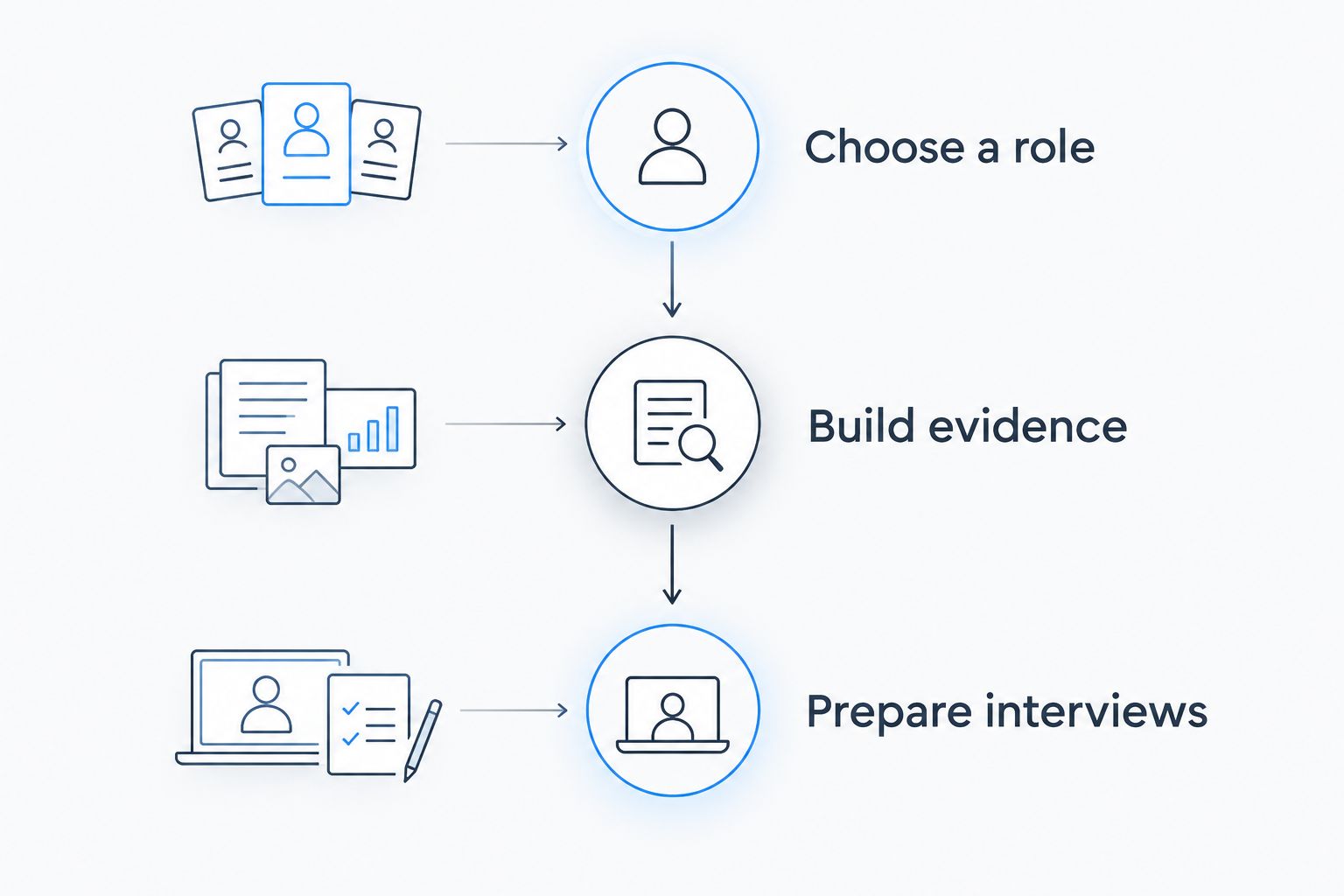
Then turn that choice into an application plan:
- Choose a role: Identify the work you want to own, not just a title.
- Build evidence: Prepare a project that demonstrates that work and explains its limitations.
- Prepare interviews: Practice the technical questions and project discussion relevant to the vacancy.
Before accepting a role, ask who owns the methodology, how much time goes to reporting, and what technical deliverable a graduate produces. Ask whether the team builds models or consumes outputs from another group. These questions expose the difference between a quantitative title and quantitative work.
QuantMinds offers resume review and interview preparation alongside individual coaching. Use that support to examine your candidate story; keep technical project work and vacancy-specific research in your own preparation plan.
Sharpen your quant career preparation
Explore resume review, interview preparation, and individual career coaching.
FAQ
What's the best risk management career path for a quant finance graduate?
Market risk quant is the default choice for graduates interested in traded instruments, derivatives, and portfolio exposure. Model validation, credit risk, and risk development are better choices when your strongest interests are model scrutiny, statistical estimation, or software engineering.
Is model validation better than market risk?
Model validation is better for candidates who prefer independently testing models; market risk is better for candidates interested in portfolio exposure and market movements. Choose by the work you want to own, not by the title alone.
Can a software-focused graduate work in risk management?
Yes, risk quant development is a relevant path for software-focused graduates. Prepare evidence of tested numerical implementations, reliable data handling, and clear software design.
Does a risk management job lead directly to quant trading?
No, a risk management job does not guarantee a move into quant trading. Risk work develops relevant skills, but trading applications still need evidence suited to strategy research, execution, or trading decisions.
Do quant finance graduates need an FRM qualification for risk roles?
An FRM qualification is not a universal requirement for every risk role. Read the vacancy's requirements and prioritize the technical evidence it requests before choosing another credential.
What should a graduate put on a risk management resume?
Put role-relevant projects, technical methods, implementation work, and clearly supported results on your resume. Explain what you modeled, how you evaluated it, and which limitations you identified.
Can QuantMinds help with quant finance career preparation?
QuantMinds offers resume review, interview preparation, and individual coaching for professionals and students pursuing quantitative finance roles. Coaching supports application preparation; it does not replace technical skills or guarantee an offer.
One last thing
A better risk model is not always the more complicated model. A model that estimates a 95% loss quantile answers a different question from one estimating a 99% quantile; neither confidence level fixes bad data or inappropriate assumptions.
For your next interview, bring a project limitation you can defend. Explain when the output stops being trustworthy, how you detected that weakness, and what you would change. That discussion reveals more judgment than reciting the model's name.