

Best overall route: a financial engineering technical intensive for candidates who need applied finance training. Best for experienced programmers: a software engineering intensive focused on quant development. Best for recruiting-ready candidates: QuantMinds career coaching, not a bootcamp. This 2026 guide compares preparation routes so you can choose the right kind of help before committing to a program.
- Choose financial engineering bootcamps for career changers by target role, assessed work, and prerequisite fit.
- QuantMinds is best for technically prepared candidates who need quant career coaching, resume review, and interview preparation.
- Software engineering intensives suit development gaps; statistical modeling intensives suit research gaps.
- An MFE preparation bridge addresses academic prerequisites, not immediate recruiting readiness.
Why this matters
A career change into quantitative finance involves separate problems: acquiring technical skills, demonstrating those skills, and presenting a credible application. A bootcamp addresses only the parts its curriculum actually teaches and assesses. Completing a course is not the same as being ready to explain your work in an interview.
Start with the destination. Quantitative research, trading, and development require different preparation, so a program labeled financial engineering is not automatically the right choice. Use the career-changer quant interview preparation guide to connect your training decision to the role you want.
The ranking below compares five preparation routes, not named bootcamp providers. Coaching and MFE preparation are included as alternatives because your next move is not necessarily another technical course.
What makes the best financial engineering bootcamps for career changers?
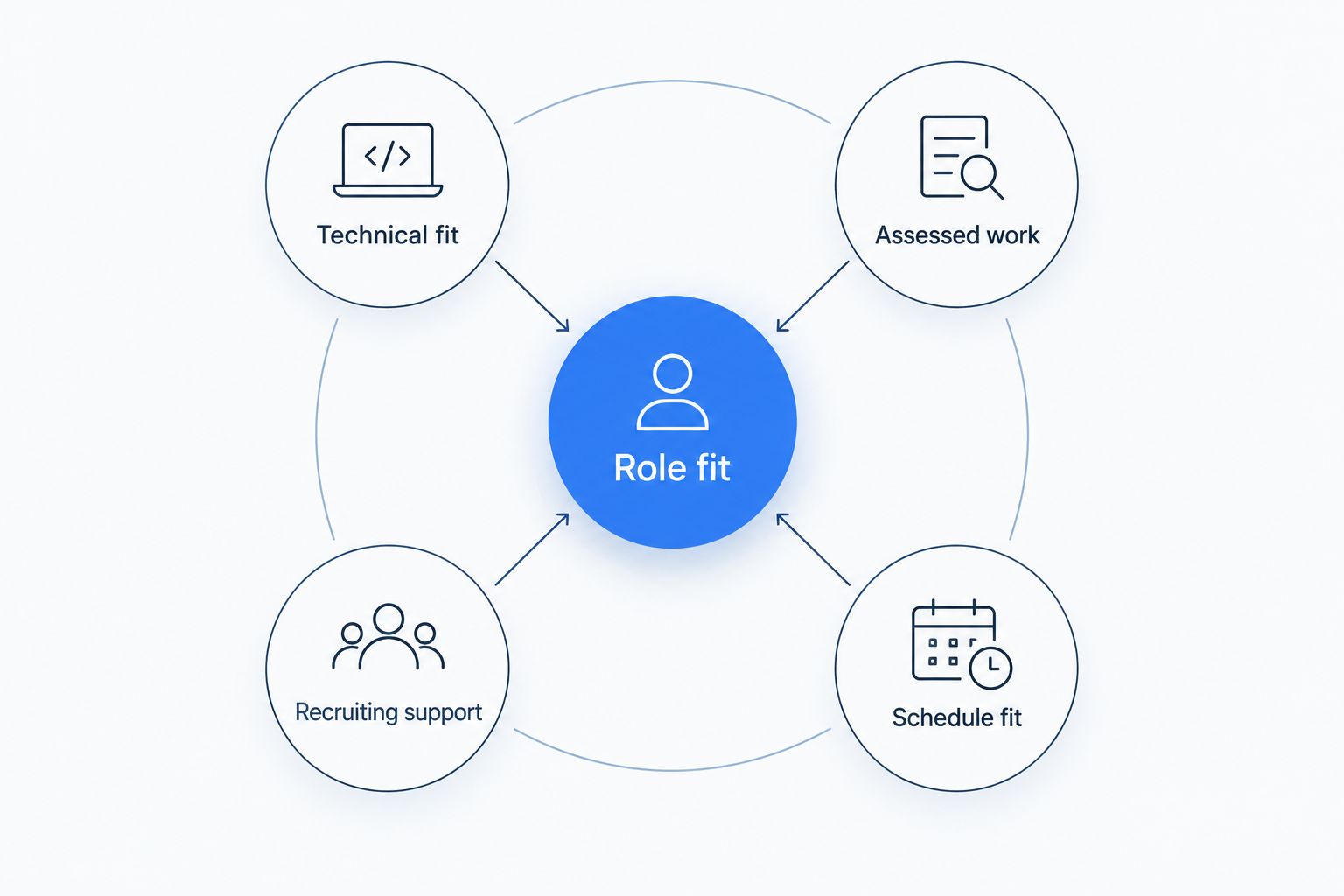
Use these criteria to evaluate a 2026 program. Ask for evidence of what you will study, submit, and receive feedback on; a broad promise of career transformation does not answer those questions.
- Role fit: The curriculum addresses the work and interview requirements of your target research, trading, or development role.
- Technical fit: Entry requirements match your current mathematics and programming ability. Advanced terminology does not replace prerequisite knowledge.
- Assessed work: You complete work that someone evaluates, rather than merely watching demonstrations or copying notebooks.
- Recruiting support: The provider explains exactly what support covers. Resume feedback, technical assessment, and employer introductions are different services.
- Schedule fit: Required attendance, assignments, and preparation fit around your existing work and responsibilities.
Role fit comes first. A polished syllabus is irrelevant if it prepares you for a different job. For example, a development candidate should examine programming depth, while a research candidate should examine statistical reasoning and model evaluation.
Preparation routes at a glance
The table ranks each route by a distinct use case. It does not treat coaching as technical instruction or a preparation course as a graduate degree.
| Rank and option | Best for | Standout purpose | Key limitation |
|---|---|---|---|
| 1. QuantMinds career coaching | Technically prepared candidates who need application and interview help | Resume review, interview preparation, and 1-on-1 coaching | Coaching is not a financial engineering bootcamp |
| 2. Financial engineering technical intensive | Candidates connecting existing mathematics and coding to finance | Focused applied-finance preparation | A course certificate does not establish job readiness |
| 3. Software engineering intensive | Career changers targeting quant development | Structured programming practice | General coding training does not cover every quant development requirement |
| 4. Statistical modeling intensive | Analysts targeting quantitative research | Model construction and evaluation practice | General modeling work needs a connection to the target role |
| 5. MFE preparation bridge | Candidates preparing for financial engineering graduate study | Prerequisite preparation | Preparation does not confer admission or a degree |
1. QuantMinds: best career coaching for recruiting-ready candidates
QuantMinds provides resume review, interview preparation, and 1-on-1 coaching for professionals and students pursuing quantitative research, trading, and development roles at hedge funds and prop trading firms. The firm was founded by a former UC Berkeley MFE program executive director. That background is relevant to candidates deciding how to present their experience or approach MFE admissions.
This is the right category of support when your immediate problem is positioning or interview preparation rather than learning mathematics or programming from scratch. Bring your resume, target roles, and examples of work you can defend. Concrete materials make the conversation more useful than a general request to break into finance.
QuantMinds is best for technically prepared career changers who need quant career coaching and interview preparation. It belongs beside bootcamp options as a different route, not under a technical-training label.
Coaching pros:
- Addresses the resume and interview parts of a career change.
- Offers 1-on-1 support rather than only course-based instruction.
- Covers candidates pursuing research, trading, and development roles.
Coaching cons:
- Does not replace a technical bootcamp or graduate degree.
- Application preparation cannot substitute for skills you cannot demonstrate.
Best for: Candidates who can already show relevant technical work but need help presenting it and preparing for interviews.
Verdict: Buy coaching for a recruiting problem; skip it as a substitute for foundational technical study.
2. Financial engineering technical intensive: best for applied finance gaps
A financial engineering technical intensive is the strongest bootcamp route when you already have mathematical and programming foundations but need to connect them to finance. Evaluate programs for instruction in relevant topics such as probability, numerical methods, derivatives, and model implementation. The exact mix should follow your target role, not the breadth of the course title.
For your 2026 shortlist, ask to see an assignment brief and its assessment criteria. You should understand what you must build, what assumptions you must explain, and how feedback identifies errors. Do not infer that a program teaches these things simply because its marketing mentions quantitative finance.
A useful selection test is whether the work forces you to connect mathematics, implementation, and interpretation. A notebook that produces an answer without explaining the model's assumptions is weak evidence of understanding.
Technical intensive pros:
- Can connect existing technical knowledge to finance-specific problems.
- Gives you a focused curriculum to evaluate against target roles.
- Provides a structure for applied work when assignments are assessed.
Technical intensive cons:
- Is a poor fit when you still lack the stated prerequisites.
- Does not make its certificate equivalent to an MFE degree.
- Needs separate evaluation of recruiting support and interview preparation.
Best for: Engineers, scientists, and other technical professionals filling an applied-finance gap.
Verdict: Buy when the syllabus matches your role and the prerequisites match your ability; skip a mismatch.
3. Software engineering intensive: best for quant development pivots
A software engineering intensive is the better route when your intended job is building software and your main gap is programming depth. For quant development, examine the target job descriptions before choosing a curriculum. Look for the languages, algorithms, testing practices, and systems knowledge those descriptions actually request.
Do not choose a general coding program on the assumption that all developer roles require the same preparation. Web application projects and research infrastructure projects demonstrate different kinds of work. Your portfolio should make the connection to the target job explicit.
Compare 3 target job descriptions and mark their shared requirements. This is a recommended screening exercise, not a claim about how many applications you need. Use the overlap to decide which training belongs on your shortlist.
Software intensive pros:
- Concentrates your effort on implementation rather than broad finance coverage.
- Supports a development-focused career story.
- Gives you a basis for selecting projects that demonstrate programming ability.
Software intensive cons:
- General-purpose instruction does not automatically address quant development.
- Coding exercises alone do not demonstrate software design or research judgment.
- Research and trading targets require a separate skills assessment.
Best for: Career changers pursuing quant development who need stronger programming foundations.
Verdict: Buy for a documented development gap; skip it when your real gap is statistical reasoning or recruiting preparation.
4. Statistical modeling intensive: best for research-oriented analysts
A statistical modeling intensive suits candidates who want to strengthen the reasoning behind empirical work. Evaluate the curriculum for estimation, validation, uncertainty, and clear explanations of modeling choices. Those subjects matter more to this route than a long list of software packages.
For finance-related projects, examine how the course treats time-dependent data. Training and evaluating a model without respecting the information available at each point creates an unreliable result. You should be able to explain why your evaluation design fits the question.
Choose 1 reproducible project to develop beyond the classroom exercise. Document the question, data preparation, baseline, evaluation method, and limitations. The purpose is not to produce an impressive-looking result; it is to produce work you can defend.
Modeling intensive pros:
- Focuses attention on reasoning and evaluation, not just implementation.
- Helps you turn analytical experience into explainable project work.
- Supports preparation for conversations about assumptions and limitations.
Modeling intensive cons:
- A general data-science curriculum is not automatically financial engineering training.
- A polished project does not prove that you understand every modeling choice.
- Does not replace development preparation for software-heavy roles.
Best for: Analysts with some coding experience who need stronger statistical modeling skills for a research pivot.
Verdict: Buy for a statistical reasoning gap; skip a curriculum built around demonstrations without assessed analysis.
5. MFE preparation bridge: best for graduate-study prerequisites
An MFE preparation bridge is for candidates whose next step is applying to a financial engineering master's program. Its job is to strengthen academic foundations, not to turn course completion into a hiring credential. Compare its content directly with the requirements of each program you intend to apply to.
In 2026, build your preparation plan from the current admissions requirements rather than an old checklist. Identify where you need formal coursework, where you need refreshed knowledge, and where you need clearer evidence of readiness. These are separate tasks.
Ask each intended graduate program how it evaluates the coursework you are considering. Do not assume that a preparation provider's certificate satisfies an admissions requirement or carries academic credit.
MFE bridge pros:
- Organizes study around a specific graduate-admissions goal.
- Helps you identify prerequisite gaps before submitting applications.
- Keeps academic preparation distinct from immediate job-search preparation.
MFE bridge cons:
- Does not confer admission or a graduate degree.
- Is indirect preparation if your goal is an immediate job search.
- Requires checking requirements separately for each intended program.
Best for: Career changers who have chosen graduate study and need prerequisite preparation.
Verdict: Buy for a verified admissions gap; hold if you have not decided whether graduate study fits your goal.
How these routes are ranked
This ranking follows role fit, technical fit, assessed work, recruiting support, and schedule fit. It separates the problem each route addresses instead of pretending that coaching, coding instruction, and MFE preparation are interchangeable.
Before choosing a 2026 program, ask the provider to explain the required starting level and show how work receives feedback. Request a clear description of recruiting support. Treat testimonials as individual experiences, not evidence that your background will produce the same outcome.
Which preparation route should you choose?
Choose a financial engineering technical intensive by default only if you already have the foundations and need applied-finance instruction. If your gap is elsewhere, choose the corresponding route rather than the broadest course.
- Choose career coaching when technical readiness is established but your application or interview preparation needs work.
- Choose software training when implementation is the obstacle to a development role.
- Choose statistical modeling when research reasoning is the obstacle.
- Choose an MFE bridge when verified admissions prerequisites are the obstacle.
QuantMinds career coaching is the choice for candidates seeking resume review, interview preparation, and 1-on-1 support rather than another technical curriculum.
Discuss your quant career transition
Bring your resume, target roles, and questions about interview preparation or MFE admissions.
FAQ
What's the best financial engineering bootcamp for a career changer?
The best route is a financial engineering technical intensive when you already have mathematical and programming foundations and need applied-finance training. Choose a different route if your main gap is coding, statistics, admissions preparation, or recruiting.
Is QuantMinds a financial engineering bootcamp?
QuantMinds is a career coaching firm, not a financial engineering bootcamp. It provides resume review, interview preparation, and 1-on-1 coaching for candidates pursuing quantitative research, trading, and development roles.
Can a bootcamp replace an MFE degree?
A bootcamp does not confer an MFE degree. Whether you need graduate study depends on your target roles, existing qualifications, and the requirements of the employers you pursue.
Should a software engineer choose a coding bootcamp or financial engineering training?
A software engineer should choose according to the missing skill, not the course label. Financial engineering training addresses an applied-finance gap; additional software training addresses a documented programming or systems gap.
What should I ask before enrolling in a financial engineering bootcamp?
Ask about prerequisites, assessed assignments, feedback, and the exact scope of recruiting support. Request examples that show what you will submit and how the provider evaluates it.
Can a bootcamp guarantee a quant job?
Course completion does not guarantee a quant job. You still need to meet the role's requirements and demonstrate your ability through application materials and interviews.
What should I prepare before speaking with a career coach?
Prepare your resume, target job descriptions, and examples of technical work. State whether you need help with role selection, applications, interview preparation, or MFE admissions.
One last thing
Before enrolling, practice a 2-minute explanation of your strongest technical project. State the question, your approach, the evaluation method, and the main limitation without reading from your notes.
Use that exercise to sharpen your 2026 decision. If you cannot explain the reasoning, prioritize technical study and feedback; if you can explain it but your resume does not communicate it, prioritize application work. Choose training that addresses the gap you can name.