

Yes, bootcamp graduates can compete for quant developer roles in 2026, but a bootcamp certificate alone does not demonstrate the engineering skills the role demands. Your strongest case is working code you can explain, test, and defend in an interview. Target quant development rather than treating quant research, trading, and development as the same job.
- Yes: bootcamp graduates can compete for quant developer roles by showing working code, not just a certificate.
- Build a project you can test and explain before sending quant developer applications.
- QuantMinds is best for candidates who need direct feedback on their resume and interview preparation.
Can bootcamp graduates compete for quant developer roles?
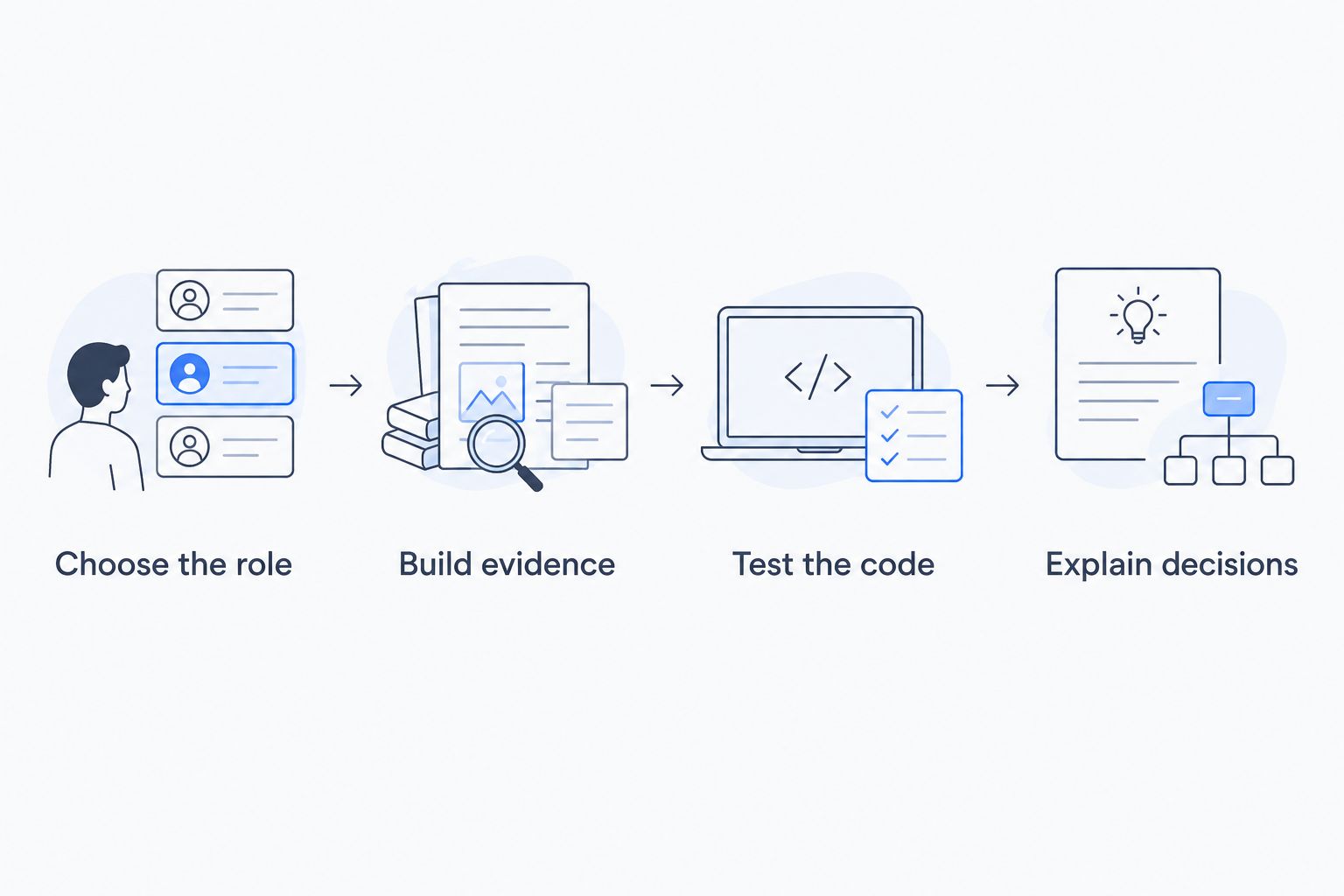
Yes. Use this sequence to decide whether your bootcamp background supports an application in 2026:
- Choose the role. Read the quant developer posting and identify the programming, software design, and domain knowledge it asks you to use. Do not substitute a quant researcher preparation plan for a developer application.
- Build evidence. Select a project that shows code you wrote and decisions you made. A finished repository gives an interviewer something to inspect; a course completion statement does not show how you work.
- Test the code. Add tests, document how to run the project, and be ready to explain a failure you found and fixed. If the project depends on assumptions, state them.
- Explain decisions. Practice describing why you chose the approach, where it breaks, and what you would change. Clear answers matter when an interviewer asks you to move beyond the example you rehearsed.
If you need an outside read on whether your resume and interview answers make that case, QuantMinds offers resume review, interview preparation, and one-on-one coaching for candidates pursuing quantitative roles. Start with the evidence you already have, not a claim that a certificate stands in for it.
Why this matters
A bootcamp describes how you learned; a quant developer application must show what you can build. In 2026, the practical question is not whether the word bootcamp appears on your resume. It is whether a reader can find relevant technical work, understand your contribution, and ask you detailed questions about it.
Quant development is also not interchangeable with quant research or trading. A developer-focused application should foreground software implementation and engineering judgment. If you lead with trading interest but cannot discuss your code in depth, you have left your strongest potential evidence off the page.
That distinction gives you a useful filter before you apply. Read the responsibilities, match each major one to something you have actually done, and mark any gap you cannot yet discuss. Apply with proof of the work, not a promise that you can learn it later.
Which background makes the strongest application?
No educational route guarantees a quant developer interview. The table compares what each route can put in front of an employer and what still needs to be proved. It is a guide to presenting evidence, not a ranking of credentials.
| Route | Best for | Useful evidence | Limitation to address |
|---|---|---|---|
| Bootcamp plus independent project | A graduate who can show code beyond class assignments | A repository with tests, documentation, and a clear account of personal contributions | A course project alone can make independent decisions hard to assess |
| Bootcamp plus software work | A candidate with development experience outside the bootcamp | Shipped code and specific engineering decisions you can discuss | General software experience still needs a clear connection to the target role |
| Degree coursework plus projects | A candidate with relevant formal study | Technical coursework supported by code you built | Coursework alone does not demonstrate how you implement and debug |
Best for a bootcamp graduate: lead with the strongest relevant code you can defend, whether you wrote it during the bootcamp, at work, or independently. Do not label a project independent if it followed a prescribed classroom exercise. Say what was provided, what you chose, and what you changed.
A hiring conversation can move quickly from a project summary to a design choice or a failed test. Prepare both levels. You should be able to give a short description to a recruiter and a detailed account to an engineer without changing the underlying story.
What should a bootcamp graduate put on a quant developer resume?
Put technical evidence where a reader can find it. In 2026, your resume should make the connection between the target role and your work without asking the employer to infer it from a bootcamp name.
For each relevant project, state the problem, your contribution, the tools you used, and how you checked the result. Name a test or debugging decision if it illustrates your engineering work. Avoid a long list of technologies you cannot use confidently when questioned.
Treat team projects carefully. Separate your contribution from the group's work, especially if the repository contains code you did not write. If the result is hard to explain without claiming the entire project, choose a different example or describe your part precisely.
Your LinkedIn profile and resume should tell the same story. If one presents you as a general web developer and the other presents you as a quant developer, explain the bridge through actual projects or work. A change in job title on a profile is not evidence of a change in skills.
How do you choose a project to show?
Choose work that lets you discuss implementation choices, tests, and trade-offs. You do not need to make the project sound like a production trading system. You do need to be honest about what it does and what it does not do.
A useful project description answers three questions: What did you build? Which part did you own? How did you check that it worked? If you cannot answer all three without looking at a tutorial, improve the work before featuring it in a quant developer application.
Why bootcamp graduates get different results
These factors change the strength of an individual application. None turns a certificate into an automatic qualification.
- Role fit. A posting centered on software implementation calls for different evidence from one centered on research. Check the actual responsibilities before tailoring your resume.
- Project ownership. Work you designed, changed, and debugged gives you more to discuss than a project you only followed step by step.
- Code quality. Readable structure, tests, and a way to run the project let someone examine your work rather than take your summary on trust.
- Prior experience. Relevant software work belongs in the application. Describe the work itself instead of making the bootcamp your entire professional story.
- Interview readiness. Be prepared to write code, reason through a problem, and explain your choices. A polished repository does not answer live questions for you.
- Application clarity. Your resume and LinkedIn profile should make the same credible case for the same type of role.
Use these factors as a diagnostic, not a scoring system. In 2026, a candidate who needs better evidence should improve a project or clarify prior work before spending the entire application on a credential description.
How should you prepare for a quant developer interview?
Begin with the code on your own resume. If you name a project, expect to explain its structure, its tests, and a change you would make. That discussion is a better starting point than memorizing answers disconnected from your work.
Then practice writing and explaining code without relying on the project in front of you. After each exercise, review the assumptions you made and the cases your solution missed. The aim is not to recite a perfect script; it is to make your reasoning visible when the question changes.
Finally, prepare a concise account of your transition. Explain what the bootcamp taught you, what you built afterward, and why the target role matches the evidence. Skip the claim that enthusiasm for markets compensates for an engineering gap.
QuantMinds is best for bootcamp graduates who want direct feedback on how they present their work and prepare for quant developer interviews. Coaching can identify a weak explanation; it cannot replace code you have not written. Bring a resume, a role description, and a project you are ready to discuss.
Can you apply without a computer science degree?
Yes, you can apply without a computer science degree. Your 2026 application still needs to address the technical requirements in the specific posting with work you can explain. Do not treat the absence of a degree as the whole problem if the more immediate gap is missing project evidence.
Is a bootcamp certificate enough by itself?
No. A certificate records training, while a quant developer application needs evidence of engineering ability. Use the training as context and let your code, experience, and interview answers carry the case.
FAQ
Can bootcamp graduates compete for quant developer roles in 2026?
Yes, bootcamp graduates can compete for quant developer roles in 2026. Show working code, relevant experience, and decisions you can defend rather than relying on the certificate alone.
What should a bootcamp graduate show in a quant developer portfolio?
Show a project you built or substantially changed, with clear instructions, tests, and an honest account of your contribution. Be ready to explain its limitations.
Do I need a computer science degree to apply for quant developer jobs?
No degree is required to submit an application. Check each posting's stated requirements and show how your work addresses them; do not assume every employer uses the same criteria.
Is a bootcamp project enough for a quant developer resume?
A bootcamp project is useful when you can explain your decisions and identify your contribution. If you followed prescribed steps, distinguish those steps from the work you did independently.
Should I target quant researcher and quant developer roles with the same resume?
No. Tailor a quant developer resume to implementation and engineering work, and address a research role's stated requirements separately. The roles should not share a generic application by default.
How do I prepare to discuss my bootcamp background in an interview?
Explain what you learned, what you built, and what you did beyond the course instructions. Then connect that work to the responsibilities in the specific quant developer posting.
Can QuantMinds help a bootcamp graduate prepare for quant developer applications?
Yes. QuantMinds offers resume review, interview preparation, and one-on-one coaching for people pursuing quantitative roles. Bring your resume and a project so the discussion can focus on your actual evidence.
One last thing
Before you add another course to your 2026 resume, ask someone to question you about the project already on it. If you cannot explain a test, a design decision, or your own contribution, that is the next piece of work to fix. The certificate gets a line on the resume; the explanation has to survive the interview.