

Best starting point for energy-market switchers: Vitol. Best for metals and logistics: Trafigura. Best for mining-linked analysis: Glencore. Best for agricultural markets: Cargill. Best for power-market specialists: Statkraft. This 2026 guide ranks commodities trading firms for quants by the experience you can bring to a specific desk—not by employer prestige.
- Vitol leads this commodities trading firms for quants shortlist for candidates bringing energy-market knowledge.
- Trafigura fits metals and logistics specialists; Glencore fits candidates with mining-linked analytical experience.
- Cargill fits agricultural-market specialists; Statkraft fits power-market specialists.
- QuantMinds provides quant career coaching, resume review, and interview preparation—not employment at these firms.
Why this matters
A commodities career switch starts with the market problem you understand. An electricity forecasting specialist and a software engineer building trading infrastructure need different shortlists, even when both search for quant roles.
Physical commodities also require questions that a generic finance application misses. What moves through the supply chain? Where does delivery happen? What constraints affect storage, transport, or generation? Your application needs to connect technical skills to those questions.
QuantMinds is best for quant career switchers seeking resume review, interview preparation, and individual coaching. Founded by a former UC Berkeley MFE program executive director, QuantMinds helps professionals and students pursue quantitative research, trading, and development roles. Coaching is separate from employer selection: first identify the work, then make your evidence fit it.
What makes the best commodities trading firm for quants?
Use these criteria before reading the ranking. A recognizable company name does not establish that a particular position is quantitative, suitable for your background, or connected to trading decisions.
- Market fit: Match your experience to energy, metals, agriculture, or electricity. Name the connection rather than calling yourself interested in commodities.
- Role substance: Separate forecasting and research from software development, risk reporting, and commercial analysis. Read the responsibilities, not just the title.
- Physical constraints: Identify whether the work involves delivery, inventory, transport, generation, or processing. These change the modeling problem.
- Technical evidence: Bring code, a defensible research result, or an analytical system that demonstrates the requested skills.
- Decision connection: Establish who uses the output and what decision it supports. A model without a user is not a complete career story.
- Entry requirements: Check the specific team's requirements for experience, education, location, and work authorization. Do not infer them from the firm's reputation.
For your 2026 search, distinguish 3 role families: quantitative research, quantitative trading, and quantitative development. These are search categories, not promises that every firm uses the same titles or hires all three in every market.
Commodities trading firms for quants at a glance
The order below matches the detailed sections. “Best for” identifies a background-to-business match; it does not claim that an employer is easiest to enter.
| Firm | Best for | Relevant business feature | Key limitation for a switcher |
|---|---|---|---|
| Vitol | Energy-market specialists | Energy trading and related physical activities | Energy exposure alone does not establish a quantitative role |
| Trafigura | Metals and logistics specialists | Physical commodities trading across metals and energy | Commercial and logistics responsibilities differ from quant research |
| Glencore | Mining-linked analysts | Commodity production alongside marketing activities | Production analysis and trading research are different jobs |
| Cargill | Agricultural-market specialists | Agricultural supply chains, processing, and trading | A broad agricultural business requires careful team selection |
| Statkraft | Power-market specialists | Renewable generation and energy market activities | Power-market expertise is more specific than general financial modeling |
1. Vitol: best commodities trading firm for energy specialists
Vitol is an energy trading company with physical energy activities. That makes it a relevant starting point if your existing work concerns oil, gas, power, or the systems used to analyze energy markets.
The career-switch argument is straightforward: show the energy problem you already understand, then explain the quantitative contribution. A forecasting project needs a defined target and evaluation method. A software project needs a clear connection to data quality, reliability, or a trading workflow.
Vitol pros:
- A direct business connection for candidates with energy-market experience.
- Physical-market context for research involving supply, demand, and delivery.
- A relevant target for examining how technical work supports energy decisions.
Vitol cons:
- The company name does not tell you whether a role involves research, development, or commercial analysis.
- A generic equities backtest does not demonstrate knowledge of physical energy markets.
For your 2026 shortlist, read the job description for the actual output: forecasts, tools, risk measures, or trading analysis. Ask which desk uses it. Do not substitute familiarity with energy headlines for a technical explanation of your work.
Best for: Candidates with energy-domain knowledge who can demonstrate modeling or software skills.
Verdict: Hold unless you can connect your technical evidence to an energy-market decision.
2. Trafigura: best commodities trading firm for metals and logistics
Trafigura trades physical commodities, including metals and energy. Its business makes it a relevant research target for candidates whose experience concerns commodity flows, transportation, inventory, or industrial supply chains.
A logistics analyst should not erase that background to sound like a generic financial researcher. Explain the constraint you modeled and how uncertainty affected the decision. A metals specialist should show how domain knowledge translates into an analytical question, rather than relying on terminology alone.
Trafigura pros:
- A business connection for metals-market and supply-chain specialists.
- Physical trading context for work on flows, inventories, and transport.
- A useful target for candidates who combine domain knowledge with analytical methods.
Trafigura cons:
- Logistics optimization is not automatically trading strategy research.
- A commercial analyst title does not establish a quantitative mandate.
Before applying, identify whether the position supports commercial decisions, operations, risk, or research. Those functions need different evidence. An optimization model should explain its objective and constraints; a forecast should explain what was knowable when the prediction was made.
Best for: Career switchers with metals, logistics, or supply-chain expertise and demonstrable technical work.
Verdict: Hold unless the team's responsibilities match the analytical problem you can solve.
3. Glencore: best commodities trading firm for mining-linked analysis
Glencore combines commodity production with marketing activities. That distinction matters for candidates coming from mining, geology, industrial engineering, or analysis of resource businesses.
Your strongest bridge is the relationship between production conditions and market outcomes. Start with a question you understand: output uncertainty, operational constraints, or the interpretation of commodity supply data. Then show what your model adds beyond a descriptive industry summary.
Glencore pros:
- A direct business connection for candidates with mining or resource-sector experience.
- Production context alongside commodity marketing activities.
- Relevant business problems for analysts studying industrial supply and uncertainty.
Glencore cons:
- An operational modeling role is not the same as a trading research role.
- Mining expertise does not replace the coding and statistical evidence required by a technical position.
For a 2026 application, distinguish the production-side question from the market-side question. Explain which one your project answers. If your work concerns equipment reliability, do not relabel it as trading research; explain the transferable methods and the remaining gap honestly.
Best for: Mining-linked analysts and technical specialists who can translate production knowledge into a clearly defined quantitative problem.
Verdict: Hold unless you can identify whether the target team serves production, marketing, or trading analysis.
4. Cargill: best commodities trading firm for agricultural specialists
Cargill operates across agricultural supply chains, including processing and trading. It belongs on this shortlist for candidates with experience in agricultural economics, crop analysis, weather-sensitive forecasting, food systems, or supply-chain modeling.
The useful connection is not simply that agriculture uses data. It is that your previous work addresses a recognizable business uncertainty. Explain the relationship between the data, the forecast, and the decision without claiming a profitable trading signal you have not demonstrated.
Cargill pros:
- A business connection for agricultural and food-supply-chain specialists.
- Physical-market context involving production, processing, and distribution.
- Relevant subject matter for forecasts built around seasonal agricultural activity.
Cargill cons:
- A broad business requires team-level research; not every analytical role supports trading.
- A good crop forecast does not, by itself, establish a tradable investment strategy.
Prepare to explain when each input became available. Weather observations, production estimates, and revised datasets require careful timing in a retrospective study. A technically clean project is more useful than an impressive result built with information unavailable at the decision point.
Best for: Candidates bringing agricultural knowledge and disciplined forecasting or data-analysis skills.
Verdict: Hold unless the role connects your agricultural expertise to the team's actual decisions.
5. Statkraft: best commodities trading firm for power specialists
Statkraft is a renewable energy company with generation and energy market activities. It is a relevant target for career switchers with power-system, electricity-market, renewable forecasting, or optimization experience.
Power is not interchangeable with a generic financial asset. Physical balancing, generation constraints, and the timing of delivery shape the analytical problem. Your project needs to reflect the market it claims to study.
Statkraft pros:
- A direct business connection for electricity and renewable-energy specialists.
- Generation context alongside energy market activities.
- Relevant problems for forecasting and optimization skills grounded in power systems.
Statkraft cons:
- Expertise in one electricity market does not establish knowledge of another market's rules.
- General finance coursework does not demonstrate power-system understanding.
For your 2026 search, identify the market, delivery period, and decision-maker before choosing a project. Be precise about whether you are forecasting generation, studying prices, or optimizing an operational decision. Those are related tasks, not interchangeable claims.
Best for: Power engineers, electricity-market analysts, and renewable forecasting specialists with strong technical evidence.
Verdict: Hold unless your experience matches the electricity market and task described by the team.
How this shortlist is ranked
This is a career-fit ranking, not a scorecard of compensation, hiring probability, or workplace quality. The business distinctions are grounded in the firms' publicly described activities: Vitol's energy business, Trafigura's physical commodities business, Glencore's production and marketing activities, Cargill's agricultural businesses, and Statkraft's generation and market activities.
The 2026 ordering puts energy first, then separates metals and logistics, mining-linked analysis, agriculture, and power. It does not rank the strength of individual quant teams. Team responsibilities and candidate requirements belong in the next stage of your research.
Turn the shortlist into a credible application
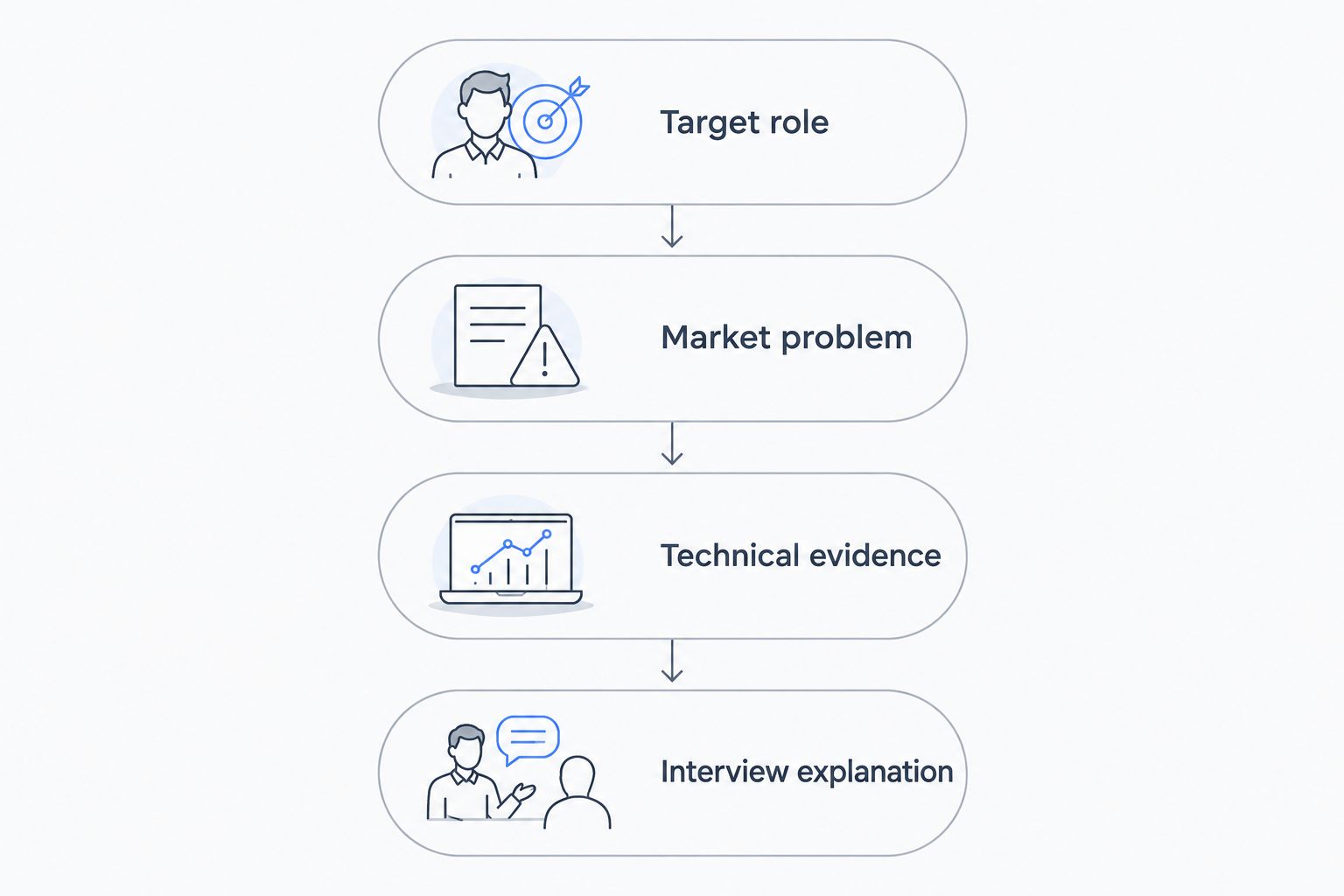
Build your application around 4 steps, in this order:
- Target role: Choose research, trading, or development. Write down the output the position requires.
- Market problem: Name the commodity, decision, and constraint your experience helps explain.
- Technical evidence: Select work that demonstrates the methods requested in the role.
- Interview explanation: Practice explaining the result, limitations, and next test without hiding behind jargon.
The sequence keeps your resume from becoming a list of unrelated skills. You are showing why a particular team should care about work you have already done.
Use a 2-project evidence pack if you need a practical preparation structure: one market-analysis project and one technical implementation. This is a recommendation, not an employer requirement. The analysis should expose assumptions and evaluation choices; the implementation should show reproducibility, testing, and readable code.
For each target role, prepare 5 questions: What decision does the team support? Which commodity market matters? What does the position produce? Which skills are required? What evidence demonstrates your fit? Answers that remain vague signal that your employer research is unfinished.
Use the guide to preparing for a quant interview as a career changer to turn that evidence into an interview explanation.
QuantMinds offers resume review, interview preparation, and individual coaching for candidates pursuing quant roles. The useful discussion is specific: which role fits your background, what your resume proves, and where your interview explanation breaks down.
Which commodities trading firm should you choose?
Choose Vitol as the default research starting point if your existing advantage is energy-market knowledge. Choose Trafigura for metals and logistics, Glencore for mining-linked analysis, Cargill for agriculture, and Statkraft for electricity and renewable-energy expertise.
Without a domain advantage, do not manufacture one. Start with a role whose technical requirements match your experience, then build enough market knowledge to explain the work honestly. QuantMinds quant career coaching is a preparation service, not a substitute for that evidence.
FAQ
What's the best commodities trading firm for a quant career switcher?
Vitol is this guide's starting choice for candidates with energy-market experience. Trafigura, Glencore, Cargill, and Statkraft fit different domain backgrounds; choose the team and role before treating any firm as your best target.
Is Trafigura better than Glencore for quants?
Trafigura is the closer shortlist match for metals and logistics specialists; Glencore is the closer match for mining-linked analysts. That distinction reflects their business activities, not a ranking of individual quant teams or hiring prospects.
Can a software engineer target commodities trading firms?
A software engineer can target roles whose development requirements match their experience. Demonstrate reliable implementation and explain the relevant market workflow rather than presenting coding ability as proof of trading expertise.
Do I need an MFE to apply to commodities quant roles?
Use the specific job description to determine whether an MFE or another degree is required. A firm-level shortlist does not establish education requirements for every team.
Are all analytical jobs at commodity merchants quant jobs?
No, an analytical title does not establish a quantitative research or trading mandate. Check whether the responsibilities concern forecasting, software, risk reporting, operations, or commercial decisions.
What should I put in a commodities quant portfolio?
Include work that connects a defined market problem to defensible technical methods. Show data timing, assumptions, evaluation, limitations, and reproducible implementation rather than relying on a headline backtest result.
Does QuantMinds hire candidates for these commodities firms?
QuantMinds is a career coaching firm, not one of the commodities employers ranked here. Its stated services include resume review, interview preparation, and individual coaching for quantitative research, trading, and development candidates.
One last thing
Ask what the team does with the model after it produces an answer. A forecast can support a trading decision, an operational schedule, or a risk report—and those imply different jobs. If you cannot name the user and the decision, sharpen your research before sending the application.