

Keep Quant Finance Institute on your shortlist when its current offering addresses the specific technical skill you need to build. Training alone stops being enough when your immediate problem is positioning your experience, securing interviews, or explaining your work under pressure. The best Quant Finance Institute alternative in 2026 is QuantMinds if you need individual quant career coaching; an MFE program is the better route if you need graduate-level financial engineering education.
- Among quant finance institute alternatives, QuantMinds fits candidates seeking individual resume review, interview prep, and quant career coaching.
- Choose an MFE program for graduate financial engineering education, not as a substitute for recruiting preparation.
- Choose focused technical study when you can identify the exact mathematical or programming skill you lack.
- Keep Quant Finance Institute if its current offering addresses your actual preparation gap.
Why this matters
You are not choosing between interchangeable products. Career coaching, graduate education, technical courses, and independent practice address different problems. A useful comparison starts with what you need to change, not which provider has the longest list of topics.
For your 2026 search, separate learning from recruiting. Knowing a subject, demonstrating that knowledge in an interview, and presenting evidence on your resume are different tasks. Pick the support that addresses the task holding you back.
Quant Finance Institute alternatives at a glance
The table compares preparation routes by purpose. Use Quant Finance Institute's current offering as your benchmark rather than assuming every alternative provides the same service.
| Option | Best for | Main focus | What to compare with Quant Finance Institute |
|---|---|---|---|
| Quant Finance Institute | Candidates whose needs match its current offering | The specific offering you are considering | Check curriculum, feedback format, and intended outcome |
| QuantMinds | Individual quant career preparation | Resume review, interview prep, and 1-on-1 coaching | Whether you need candidate-specific feedback rather than additional subject study |
| An MFE or MSFE program | Graduate financial engineering education | Academic coursework and degree requirements | Whether your goal requires a degree rather than a shorter preparation route |
| Focused technical courses | A clearly identified knowledge gap | A defined mathematical, statistical, or programming subject | Whether the syllabus covers the exact skill you need |
| Self-directed interview preparation | Candidates who can diagnose and correct their own mistakes | Independent practice and project explanation | Whether you need external feedback or can assess your own work |
Choose by the problem you need to solve, not by the category name. A credential, a stronger resume, and a better interview answer are distinct outcomes.
1. QuantMinds: best for individual quant career coaching
QuantMinds is a career coaching firm for professionals and students pursuing quantitative research, trading, and development roles at hedge funds and prop trading firms. Its stated services include resume review, interview prep, and 1-on-1 coaching. The firm was founded by a former UC Berkeley MFE program executive director.
That makes its purpose different from choosing a route primarily for subject education. If you already have technical experience but need to present it more clearly, candidate-specific career preparation addresses that task directly.
Where it shines
- Resume review: Appropriate when your application needs to communicate relevant research, programming, or analytical experience.
- Interview preparation: Appropriate when you need to explain your reasoning and work clearly in a recruiting conversation.
- Individual coaching: Appropriate when your questions depend on your own education, experience, and target role.
- MFE context: The founder's former program leadership role is relevant to candidates weighing graduate study and quant recruiting.
Where it falls short
- Coaching does not replace the mathematical or programming knowledge required for a role.
- Career preparation is not a substitute for earning a graduate degree when you decide that a degree is necessary.
- Feedback only becomes useful when you apply it: revise the resume, practice the explanation, and address the identified skill gap.
Best for: Candidates who need feedback on their individual application and interview preparation rather than another broad learning plan.
Before choosing coaching in 2026, bring a concrete problem. For example, ask whether your research experience is legible to a hiring team, whether your resume supports your target role, or where your interview explanation loses clarity. A specific question gives the conversation a clear purpose.
Verdict: Buy individual coaching for a defined recruiting problem; skip it as a substitute for technical study.
2. An MFE or MSFE program: best for graduate education
A master's in financial engineering or financial mathematics is an academic route, not simply an interview-preparation purchase. Compare individual programs by their curriculum, admissions requirements, and the work you would complete. The degree title alone does not tell you whether a program fits your intended role.
This route belongs on your list when you want structured graduate education and are prepared to undertake the associated academic work. It is a different decision from seeking help with a resume you need to submit now.
Where an MFE program shines
- Provides a defined academic path through the subjects covered by its curriculum.
- Offers a degree route for candidates who want graduate financial engineering education.
- Creates a structure for completing coursework rather than assembling an independent study plan.
Where an MFE program falls short
- Enrollment does not remove the need to prepare applications and interviews.
- A program is not a targeted fix for an unclear resume or weak project explanation.
- Different programs have different requirements; you must compare the actual curriculum against your intended work.
Best for: Candidates whose next step is graduate education, not just immediate recruiting support.
For a 2026 decision, write down why you need the degree before comparing schools. Separate academic goals from career goals: learning financial engineering, building research experience, changing fields, and improving recruiting preparation require different evidence.
Verdict: Buy the graduate education route when the education itself is necessary; hold if your only goal is fixing an application.
3. Focused technical courses: best for a specific skill gap
A focused course is a better-shaped option when you can name the subject you need to learn. That subject might be probability, statistical inference, optimization, or programming. Choose the course from the gap, not the other way around.
Read the prerequisites and assignments before enrolling. A course that covers familiar material does not address a different skill you struggle to demonstrate.
Where focused courses shine
- Let you concentrate on a defined subject rather than an entire career transition.
- Provide a syllabus you can compare with your learning objective.
- Give you a structure for studying unfamiliar material.
Where focused courses fall short
- Subject instruction does not automatically review your application materials.
- Completing exercises does not establish that you can explain your reasoning in an interview.
- A narrow course does not resolve uncertainty about which quant role fits your background.
Best for: Candidates who can identify a technical weakness and want instruction that addresses it.
Set an observable learning goal. Instead of writing “get better at statistics,” specify the concept you need to explain, the analysis you need to perform, and how you will check your result.
Verdict: Buy focused instruction for a named skill gap; skip another broad course when your problem is recruiting.
4. Self-directed preparation: best for independent practice
Self-directed preparation fits candidates who can build a study plan, check their work, and distinguish a correct answer from a memorized one. Use it to practice technical explanations and review projects you already understand.
The trade-off is feedback. Independent practice puts you in charge of both the answer and the assessment.
Where self-directed preparation shines
- Lets you work directly on the topics relevant to your target role.
- Allows repeated practice of project explanations and technical reasoning.
- Makes your preparation plan adjustable as you identify weaknesses.
Where self-directed preparation falls short
- You must detect errors in your own reasoning.
- Familiarity with an answer can conceal a weak explanation.
- Independent study does not provide an outside assessment of your resume or positioning.
Best for: Candidates who know what to practice and have a credible way to check their work.
Verdict: Hold this route while your self-assessment remains useful; seek feedback when you cannot identify what to change.
Why consider switching from Quant Finance Institute?
Consider a different route when your preparation needs change. That is a reason to reassess fit, not a claim that Quant Finance Institute performs poorly. The relevant question is whether the offering you are considering addresses your current problem.
Use these conditions to make the decision:
- Application gap: You need feedback on how your experience appears on a resume. Compare resume review and individual coaching.
- Interview gap: You understand the material but struggle to explain it. Compare preparation that addresses your reasoning and delivery.
- Technical gap: You cannot complete the underlying work. Compare instruction in the specific subject.
- Education gap: You want graduate financial engineering study. Compare MFE or MSFE programs.
Do not assume a switch is necessary because you have been rejected. First identify what happened at the stage you reached. An unanswered application and an unsuccessful technical interview give you different problems to investigate.
How to choose your next step in 2026
Use a short diagnostic before committing to any provider. This is a decision process, not a promise about how quickly recruiting will improve.
Target role
Choose 1 target role for the initial comparison: quantitative researcher, trader, or developer. Read 3 job descriptions for that role and write down the work they describe. These are suggested review counts, not hiring benchmarks.
Compare your experience with those tasks. Avoid treating every role containing the word quant as the same destination.
Application evidence
Select 2 projects you can discuss in detail. For each, identify the question, your contribution, the method, and the limitations. Use the projects you actually completed; do not add claims to make them sound more impressive.
Then check whether your resume communicates that evidence. If the project is relevant but its value is hard to understand, application review is a more direct next step than unrelated coursework.
Live explanation
Explain a project aloud without reading its summary. State the problem, defend your choices, and describe what you would change. Notice where your explanation becomes vague.
Distinguish a knowledge problem from a communication problem. If you cannot explain the method because you do not understand it, return to study. If you understand it but cannot organize the answer, practice the explanation and seek feedback.
Preparation route
Choose the route that addresses the gap you identified. Coaching, graduate education, technical instruction, and independent practice can sit alongside one another, but each should have a defined purpose.
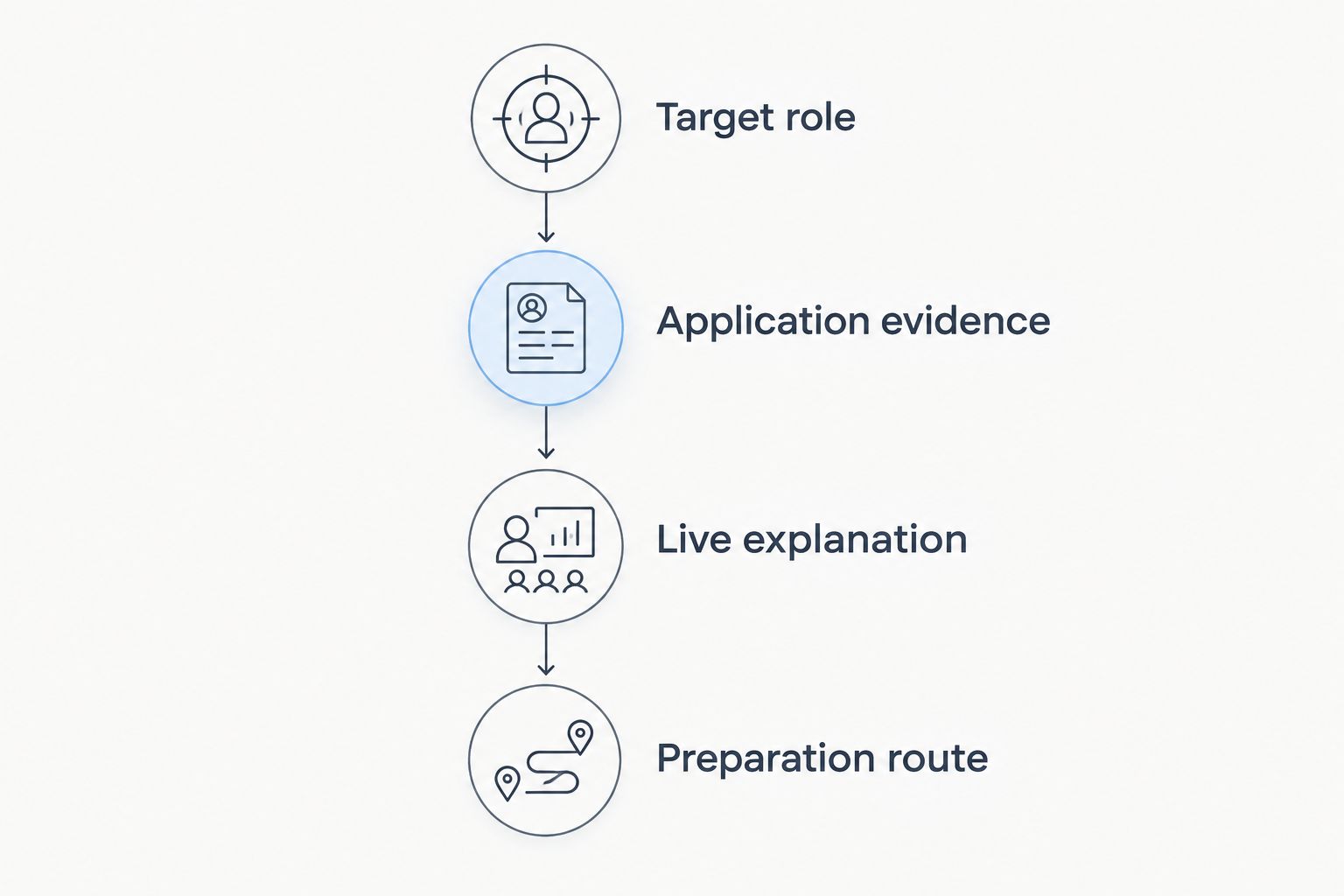
A useful decision ends with a concrete next action. That action might be revising a project bullet, studying an unfamiliar concept, practicing an explanation, or comparing graduate curricula. Avoid choosing a provider before you know what work you need it to help you do.
When staying with Quant Finance Institute is the right call
Stay with Quant Finance Institute when its current offering matches the need you have identified and you can explain how you will use it. A change of provider is not necessary just because other preparation routes exist.
If your goal is technical learning, assess the relevant curriculum and assignments. If your goal is career preparation, assess the feedback available for your own situation. Keep the comparison tied to the outcome rather than treating every route as a replacement for everything else.
For 2026, the right call is the route with a clear purpose in your preparation plan. Finish relevant work before adding another overlapping commitment.
FAQ
What's the best Quant Finance Institute alternative for career coaching?
QuantMinds is the best fit here for individual quant career coaching. Its stated services include resume review, interview prep, and 1-on-1 coaching for students and professionals targeting quantitative research, trading, and development roles.
Is career coaching better than an MFE program?
Career coaching is better for a defined application or interview-preparation problem; an MFE program is the route for graduate financial engineering education. Choose according to the task you need to complete rather than treating the two as interchangeable.
Should I choose a technical course or interview preparation?
Choose a technical course when you lack the underlying subject knowledge, and interview preparation when you need to demonstrate knowledge more clearly. Test the difference by explaining a method and defending its assumptions without reading notes.
Can I prepare for quant interviews independently?
Yes, independent preparation is a valid route when you can identify relevant topics and check your work. Seek outside feedback when you cannot distinguish a knowledge gap from a weak explanation.
Do I need to switch away from Quant Finance Institute?
No, switching is unnecessary when its current offering matches your specific preparation need. Compare the actual curriculum or service scope with the task you want to improve.
What should I bring to a quant career coaching conversation?
Bring your resume, a clearly defined target role, and examples of the work you want to discuss. Ask a specific question about application evidence, role fit, or interview preparation so the conversation has a clear purpose.
How should I compare quant preparation options in 2026?
Compare quant preparation options by purpose: career feedback, graduate education, technical instruction, or independent practice. Identify your gap first, then evaluate whether the offering directly addresses it.
One last thing
Do not add another credential until you can explain what it will help you do. If you can defend your technical work but cannot make its relevance clear on a resume, investigate that application problem first. If you cannot defend the work, return to the underlying subject.
Before your next preparation decision, write a sentence beginning: “I need help with…” Finish it with a task, not a provider's name. That sentence is your comparison criterion.