
You network into a hedge fund with no connections by manufacturing your own weak ties: cold email to portfolio managers and analysts, campus and industry events with a specific ask, and platform-based outreach that turns a stranger into a warm contact before you ever ask for a referral. The hidden cost most candidates miss is time — building a real pipeline of contacts takes 8 to 12 weeks of consistent outreach before it produces an interview, not a weekend of LinkedIn messages before an application deadline.
- Cold email to hedge fund contacts converts better with a specific, narrow ask than a generic 'any advice?' message.
- LinkedIn outreach works when you comment and engage before you message, not as a first touch.
- Campus and industry events beat cold outreach when you show up with a prepared question, not a resume in hand.
- Building a working network with no starting connections takes roughly 8-12 weeks of consistent weekly outreach.
- QuantMinds coaches candidates on the exact sequencing of cold email, LinkedIn, and event outreach for 2026 hedge fund recruiting cycles.
Why this matters
Hedge funds and prop shops hire heavily through referrals and warm intros, which is exactly why candidates without a target-school network or a family friend on the buy side assume they're locked out. That assumption is wrong, but it's also why generic advice ("network more") fails candidates with zero starting contacts — it doesn't tell you which channel to use first, what to say, or how long the process realistically takes.
Recruiting cycles for hedge fund internships and full-time roles run far ahead of the actual start date. Firms are already screening for 2027 summer internships in 2026, and candidates who wait until senior year or their final MFE semester to start building contacts are starting from behind. The good news: none of the three channels below require an existing connection to work.
How to network into a hedge fund with no connections
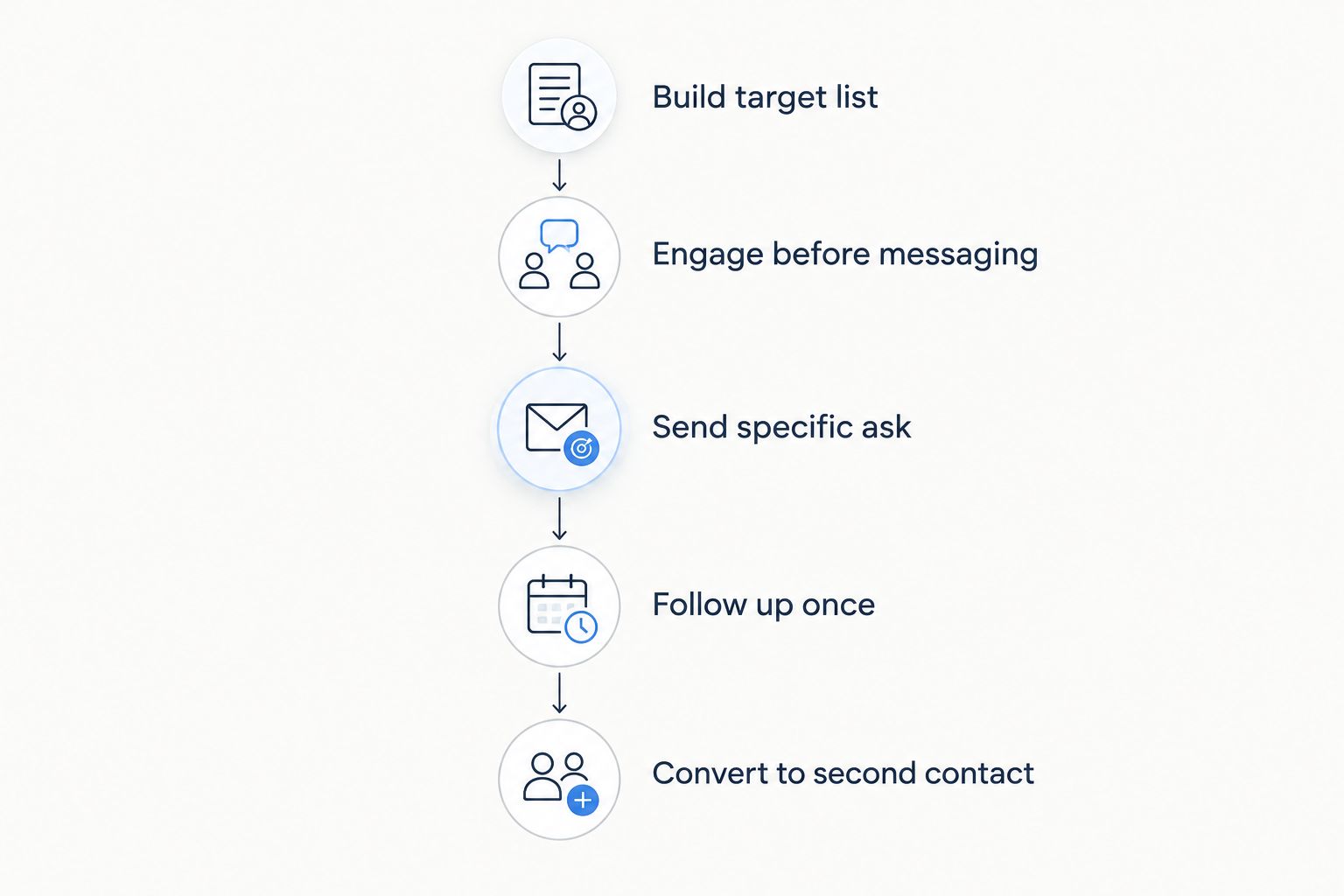
The sequence that works with zero starting contacts runs in this order:
- Build a list of 30-50 target people at 10-15 funds — analysts, associates, and junior PMs, not just heads of desks who get flooded with requests.
- Engage before you message. Comment on a post, reference a specific research note, or ask a narrow technical question in public before sending a cold message.
- Send a cold email or LinkedIn message with one specific ask — a 15-minute call about their path into the fund, never a resume attachment on the first touch.
- Follow up once, seven to ten days later, if you get no response. Two touches, not five.
- Convert every conversation into a second contact. Ask who else at the fund or in the space they'd suggest you talk to — this is how a network with zero starting nodes becomes a network with 20.
| Channel | Best for | Typical response pattern |
|---|---|---|
| Cold email | Reaching specific analysts or PMs directly | Low volume, higher intent replies |
| LinkedIn outreach | Building visibility before the ask | Works best after prior engagement |
| Campus/industry events | In-person credibility, fast follow-up | Highest conversion when paired with a prepared question |
A LinkedIn profile built around hedge fund-relevant signal — specific projects, specific coursework, specific tools — gets replies that a generic "aspiring quant" headline never will.
Cold email: the highest-leverage channel with zero connections
Cold email works with no connections because it doesn't require a shared network to send — it requires a specific, researchable ask. A message referencing a fund's actual strategy or a PM's recent public commentary gets read; a template that could be sent to any fund gets deleted in three seconds. Keep the ask to 15 minutes, propose two specific times, and never lead with "can you help me get a job."
Best for: candidates targeting specific funds or specific desks with no alumni or family in the industry. Skip it if you haven't researched the person or fund at all — a generic cold email to a portfolio manager is worse than no email.
LinkedIn: build the profile before you build the message
LinkedIn only works as a networking channel once your profile itself signals something worth replying to. Recruiters and analysts skim in seconds, and a profile with no specific projects, no specific coursework, and no specific technical detail reads as interchangeable with 500 other applicants. Fix the profile first, then start commenting on posts from people at target funds for two to three weeks before sending a single message.
Best for: candidates with time before an application deadline who can invest in visibility first. Skip it as a first-touch cold-message channel — message someone who has never seen your name before and the reply rate drops hard.
Events: the fastest path to a real conversation
Campus recruiting nights, quant finance conferences, and even smaller regional meetups compress weeks of cold outreach into a five-minute conversation. The advantage isn't the event itself — it's that a face-to-face exchange makes the follow-up email land differently. "We spoke at [event] last week" gets opened at a far higher rate than a cold subject line ever will.
Best for: candidates near a major city or a school with active recruiting events. Skip it as your only channel if you're not near events — pair it with cold email and LinkedIn instead of relying on it alone.
Why response rates vary
The same outreach message gets wildly different results depending on a handful of factors:
- Specificity of the ask — a 15-minute call about one topic outperforms an open-ended "any advice?" message every time.
- Timing relative to the recruiting cycle — messages sent during an active hiring push get buried; messages sent 6-9 months before a cycle opens get read.
- Prior engagement — commenting or reacting to someone's posts before messaging raises reply odds versus a cold first touch.
- Fund size and desk — smaller funds and junior staff reply more often than large-name funds' senior PMs, who get flooded.
- Profile and resume quality — a LinkedIn profile or resume with no specific technical detail undercuts even a well-written message.
- Follow-up discipline — one follow-up after 7-10 days recovers a meaningful share of non-responses; more than two starts to read as pressure.
Networking events that convert into an actual referral follow a repeatable pattern: research the attendee list, prepare one specific question per target, and follow up within 48 hours while the conversation is still fresh.
Get a second opinion on your outreach
A session on your resume, LinkedIn, and networking sequence before you send another cold email.
Do I need a referral to get a hedge fund interview?
No — a referral is not required, but it does move your resume out of the general applicant pool and in front of a person who already has context on you. Cold outreach that converts into even one informal conversation functions the same way a referral does: it puts a name behind your application instead of leaving it in a stack of hundreds.
How many people should I be messaging each week with no connections?
Five to ten targeted messages a week is a sustainable pace that builds a real pipeline without burning out or sounding desperate to any one fund. Fewer than that and the process stretches past a full recruiting cycle; more than that and quality of research per message tends to drop.
Does networking matter more than the technical interview prep?
Networking gets you the interview; it does not get you the offer, and treating them as substitutes for each other is the most common mistake candidates with no connections make. Once you land the conversation, the technical bar for probability brain teasers and coding rounds is identical to any other candidate's.
FAQ
How do I network into a hedge fund with absolutely no connections?
You build contacts from zero through cold email, engaged LinkedIn outreach, and campus or industry events, in that rough order of effort-to-result. Most candidates see their first real conversation within 8-12 weeks of consistent weekly outreach.
Is cold email actually effective for hedge fund networking?
Cold email is effective when the message is specific to the person and the fund, with a narrow 15-minute ask rather than an open-ended request. Generic templated cold emails sent to dozens of contacts convert far worse than five researched messages a week.
Should I message senior portfolio managers or junior analysts first?
Junior analysts and associates reply more often than senior PMs, who get flooded with requests from every applicant pool. Start with junior contacts and ask who else they'd suggest talking to.
How long does it take to build a hedge fund network from scratch?
Building a working network from zero takes roughly 8-12 weeks of steady outreach, assuming five to ten targeted messages a week. Candidates who start a full recruiting cycle ahead of applications have time to convert conversations into referrals before deadlines hit.
Do I need to attend in-person events to network into a hedge fund?
In-person events are not required but they compress the outreach timeline, since a face-to-face conversation makes a follow-up email land far better than a cold first touch. Candidates without access to events can build the same pipeline through cold email and LinkedIn alone.
What should I say in a cold LinkedIn message to a quant?
Lead with something specific — a project, a paper, or a post they wrote — and ask for a 15-minute call about one narrow topic, never a job directly. Messages that open with 'I'm interested in breaking into quant finance' with no specifics get skipped.
Does networking work if I don't go to a target school?
Networking works independent of school prestige because it's built through outreach and engagement, not alumni ties. Non-target candidates who network consistently often out-perform target-school candidates who rely on their school's brand alone.
One last thing
The candidates who break in with zero starting connections almost never do it through one big lucky message — they do it by converting one small conversation into a second contact, then a third, until the network exists where none did before. Skip that compounding step and even a well-written cold email dead-ends after one reply.