

To negotiate a prop trading job offer in 2026, get the full terms in writing, separate guaranteed compensation from conditional pay, and make a focused counteroffer tied to your qualifications and genuine alternatives. Check repayment obligations, restrictions on future employment, and the acceptance deadline before agreeing; a higher headline package does not resolve unfavorable contract terms.
- To negotiate prop trading job offer terms, compare written guarantees, bonus conditions, repayment obligations, and deadlines before countering.
- A prop trading signing bonus is not equivalent to recurring base salary; review any repayment conditions.
- Prioritize the changes that determine whether you would accept, rather than negotiating every clause.
- QuantMinds provides quant career coaching; employment-contract interpretation belongs with qualified legal counsel.
How do you negotiate a prop trading job offer?
Negotiate the written package, not the headline number. Start with the offer letter and any agreements it incorporates, then identify what needs clarification and what you want changed. If another employer is still deciding, the guide to how long hedge funds take to make an offer after a superday addresses that separate recruiting question.
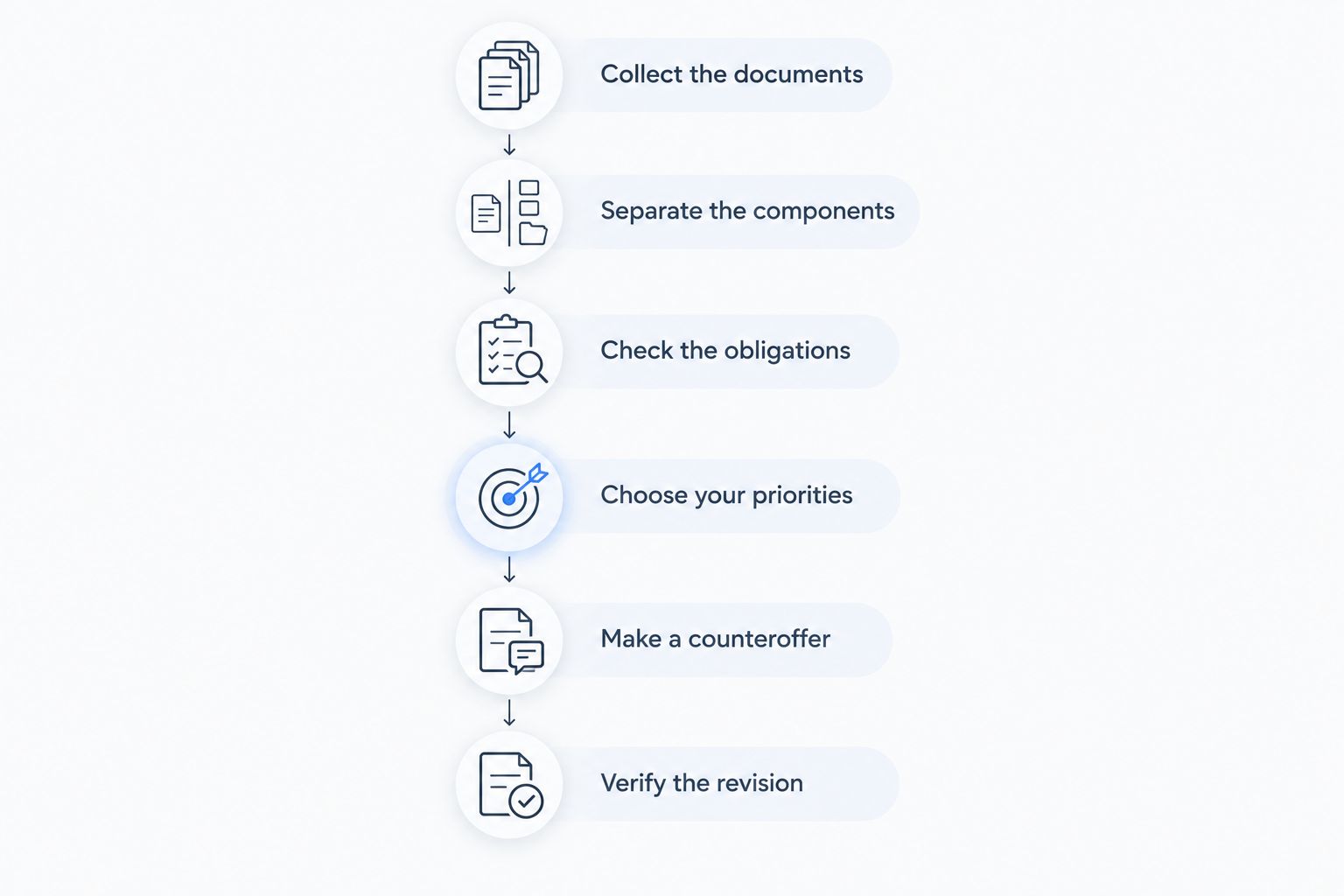
Use this sequence for a 2026 offer:
- Collect the documents. Request the offer letter, compensation terms, applicable bonus documentation, and agreements you must sign. Confirm the acceptance deadline and any outstanding conditions.
- Separate the components. Record base salary, signing payments, guaranteed bonuses, discretionary bonuses, and deferred compensation separately, where applicable. Do not treat a target as a guarantee.
- Check the obligations. Identify repayment triggers, notice requirements, confidentiality provisions, intellectual-property terms, and restrictions on future work. Ask an employment attorney about legal meaning and enforceability.
- Choose your priorities. Write down the changes that would affect your decision. Distinguish essential terms from preferences before contacting the recruiter.
- Make a focused counteroffer. Explain your interest, state the requested changes, and support them with relevant experience or a genuine competing offer. Ask which components have flexibility.
- Verify the revision. Check that agreed changes appear in the final documents. Resolve inconsistencies before accepting.
Set aside a 30-minute first review to collect questions, not to finish the decision. Build a 1-page comparison and select 2 negotiation priorities before the conversation. These are preparation checkpoints, not employer deadlines.
The sequence matters: you cannot evaluate a counteroffer properly if you have not established what the original offer actually promises.
Why this matters
A prop trading offer is a package of payment terms, responsibilities, conditions, and obligations. Comparing only the advertised total leaves important questions unanswered: what is guaranteed, when is it payable, and what happens if you leave?
For a 2026 decision, work from your actual documents rather than an undated compensation thread. An anonymous report does not establish your employer's obligations or explain the conditions attached to another candidate's package.
Your goal is an offer you understand and would accept—not a counteroffer made simply because negotiation is expected.
Which offer components should you compare?
Use the same categories for every offer. Mark a component as absent or unresolved rather than filling the gap with an assumption.
| Component | Best for | Benefit to assess | Limitation to check |
|---|---|---|---|
| Base salary | Comparing recurring fixed compensation | Establishes the stated salary rate | Does not explain bonus eligibility or future increases |
| Signing bonus | Evaluating an upfront payment | Adds a separately identified payment | Repayment obligations can change its value to you |
| Guaranteed bonus | Assessing a documented bonus commitment | Provides a stated commitment subject to its terms | Conditions and the covered period still matter |
| Discretionary bonus | Understanding conditional upside | Adds potential compensation beyond fixed pay | A target or verbal expectation is not a guarantee |
| Deferred compensation | Assessing later payment rights | Identifies compensation payable later under stated terms | Vesting, forfeiture, and payment conditions require review |
| Start-date flexibility | Coordinating graduation, relocation, or notice | Helps align the role with existing obligations | Does not resolve compensation or contract concerns |
Do not assume every prop firm uses every component. Request clarification only for terms that apply to your offer, and keep unresolved items visible until someone answers them.
For each payment, ask who determines it, what conditions apply, when it becomes payable, and where those terms are documented. If a recruiter describes a bonus as guaranteed, request the corresponding written provision.
How should you compare the first year with later years?
Separate the joining period from ongoing employment. A signing payment belongs in the joining-period comparison; it is not evidence that the same payment recurs.
Ask how bonus eligibility works when you join partway through a performance period. Check whether any written guarantee ends after a specified period and what replaces it. Do not extend a limited guarantee into future years in your comparison.
What should you ask for in a counteroffer?
Ask for the changes that address your actual reasons for hesitating. A compensation request, a start-date request, and a request to revise a contract clause solve different problems.
If recurring fixed compensation is your concern, discuss base salary. If accepting would mean giving up documented compensation elsewhere, explain that fact without sharing confidential material you are not authorized to disclose. If the obstacle is an unclear obligation, request clarification or legal review rather than treating extra pay as a substitute.
Keep the rationale specific to the role:
- Relevant experience: Connect your research, trading, or development experience to the responsibilities discussed in interviews.
- Demonstrated work: Refer to projects and technical contributions you can substantiate without exposing another employer's confidential information.
- A competing offer: State its actual status and decision deadline accurately.
- A practical constraint: Explain a real graduation, relocation, immigration, or notice issue that affects your start date.
A preference is still a preference; do not present it as market evidence. You can ask whether a component is flexible without claiming that every comparable candidate receives more.
A counteroffer email you can adapt
Use the following as a draft, replacing the general wording with accurate details before sending:
Thank you for the offer. I am interested in the role, particularly the responsibilities we discussed during the interview process. Before making my decision, I would like to discuss the compensation structure and clarify the repayment provision in the agreement.
My priority is improving recurring fixed compensation, given the relevant experience I would bring to the role. Is there flexibility on base salary? I would also appreciate written clarification of the repayment triggers and confirmation of the acceptance deadline.
I am available to discuss these points and would welcome an updated written offer reflecting any agreed changes.
Remove any sentence that does not match your situation. Do not say you are ready to accept if material questions remain unresolved.
Why does negotiating room vary?
Negotiating room depends on the offer and the employer's stated constraints. Establish those constraints directly rather than assuming that every prop trading firm handles compensation the same way.
- Role scope: Confirm whether the offer covers research, trading, development, or a combination, and which responsibilities are documented.
- Hiring structure: Ask whether compensation follows a standardized graduate package or an individually negotiated arrangement.
- Relevant experience: Support your request with work that matches the team's needs, not unrelated credentials.
- Compensation structure: Ask which components are adjustable and which are fixed under the applicable arrangement.
- Genuine alternatives: A written competing offer is different from an interview process that has not produced an offer.
- Decision timing: Confirm whether the employer can extend the deadline while material questions are reviewed.
Do not infer flexibility from a firm's reputation or another candidate's report. The useful question is concrete: which terms in this offer can the employer reconsider?
Should you negotiate without another offer?
You can request changes without a competing offer. Base the request on the role, your relevant experience, and the terms you need to accept—not an invented alternative.
Before calling, decide what you will do if the firm declines. If the current offer is acceptable, identify which requests are preferences. If an unresolved provision prevents acceptance, say so clearly without presenting it as a threat.
QuantMinds quant career coaching is best for candidates seeking individual guidance on pursuing quantitative research, trading, or development roles. Its stated services include resume review, interview preparation, and individual coaching; those services do not replace legal advice on an employment agreement.
If you seek coaching, bring a clear question about your recruiting position rather than expecting a coach to determine what a contract legally requires.
How do you handle a short acceptance deadline?
Ask for a specific extension before the existing deadline expires. Explain the genuine reason: document review, an unresolved offer term, or another active process with a real timeline.
Request written confirmation of any extension. Continue working to the original deadline unless the employer confirms a change; silence is not an extension.
For a 2026 offer, keep the offer version, deadline, recruiter correspondence, and outstanding questions together. If another process is active, tell that recruiter your actual deadline and ask whether the process can finish sooner. Do not describe an interview as a competing offer.
If an extension is refused, decide using the information and alternatives you actually have. Do not accept on the assumption that you can settle material disagreements afterward.
Which contract questions need professional review?
Start by identifying the provisions you do not understand. Ask the employer to explain its intended operation, then obtain independent legal advice where the consequences matter to your decision.
Check for provisions addressing:
- Repayment of signing, relocation, training, or other payments.
- Bonus eligibility, deferral, vesting, and forfeiture.
- Notice obligations and any restrictions during a notice period.
- Noncompete, nonsolicitation, confidentiality, and intellectual-property obligations.
- Outside activities, personal trading, and pre-existing projects.
- Dispute resolution, governing law, and incorporated policies.
The presence of a clause does not establish its enforceability. Ask a qualified employment attorney to assess the actual wording and relevant jurisdiction. Career advice cannot settle that question.
QuantMinds offers quant career coaching, not a substitute for contract counsel. Keep recruiting strategy and legal interpretation separate so each question reaches the right professional.
What should you do after the employer responds?
Compare the revised documents with your original priorities. An improved payment term does not answer a separate question about repayment, and a helpful conversation does not amend an unchanged clause.
Record each requested change as agreed, declined, or unresolved. Ask who will issue the final documents and whether the acceptance deadline has changed. Check the attachments as well as the main offer letter.
Accept only after you understand the final version. If you decline, keep the message brief and professional; you do not need to turn a decision into an argument about the firm's compensation policy.
FAQ
Can I negotiate a prop trading offer as a new graduate?
You can ask whether a new-graduate prop trading offer has flexible terms. Ask whether the package is standardized, then focus on the specific changes or clarifications that affect your decision.
How much more should I ask for in a prop trading counteroffer?
Choose a request supported by your role, experience, actual alternatives, and acceptance criteria rather than an arbitrary percentage. Separate your preferred outcome from the minimum terms you would accept.
Should I negotiate base salary or the signing bonus?
Prioritize base salary when recurring fixed compensation is your main concern, and assess a signing bonus separately as an upfront payment. Review any repayment conditions before treating the signing payment as equivalent to salary.
Can I negotiate after verbally accepting a prop trading offer?
Raise any unresolved material issue immediately rather than assuming the discussion remains open. Seek legal advice if you are unsure what obligations your acceptance or signed documents created.
Should I tell a prop firm about another offer?
Describe a genuine competing offer accurately when it is relevant to your decision. Do not fabricate terms, misstate an interview as an offer, or disclose confidential documents without authorization.
What if the recruiter says the bonus is guaranteed?
Ask for the guarantee and its conditions in the written offer or applicable agreement. Clarify the covered period, payment timing, and circumstances affecting eligibility.
Can a prop firm withdraw an offer during negotiation?
Do not treat an offer as risk-free while negotiating. Keep requests professional, ask whether the existing offer remains open, and obtain legal advice about any specific rights or obligations.
Can QuantMinds help with a quant career decision?
QuantMinds provides individual quant career coaching, resume review, and interview preparation. Use qualified legal counsel for employment-contract interpretation rather than treating career coaching as legal advice.
One last thing
Check what you keep if you leave, not just what you receive when you join. For your 2026 decision, put repayment triggers, deferred-payment conditions, and future-employment restrictions beside the compensation summary—not in a separate folder you never reopen.
That final review tests whether the offer fits your actual plans. If a material term remains unclear, turn it into a written question before turning the offer into an acceptance.