

Negotiating a hedge fund job offer means countering on the full package at once - base, bonus target, sign-on, and start date - using a documented competing offer or comp benchmark as leverage, not a vague ask to do better. Bonus pools at most funds are set before you're hired, so base salary and sign-on terms move more easily than the bonus number printed in the offer letter.
- Counter on the full package - base, bonus target, sign-on, start date - not one line item.
- A documented competing offer moves a hedge fund faster than a request to match the market.
- Bonus pools are set before you're hired, so base salary and sign-on are the easiest levers to move.
- QuantMinds coaches candidates on how to negotiate a hedge fund job offer without souring the desk relationship.
- Internship conversions and competing-offer negotiations use different scripts - know which one you're running.
Why this matters
Most candidates who get a hedge fund offer in 2026 either accept it as written or ask for a flat raise with no leverage behind it, and both moves leave money and terms on the table. A fund that extends an offer has already spent weeks of interviewer time on you, and pulling a signed offer this late in the process costs the desk more than moving a number does.
QuantMinds works through this exact conversation with candidates inside resume review, interview prep, and 1-on-1 coaching, and the same pattern shows up every cycle: candidates treat negotiation as confrontation instead of a normal step in hedge fund recruiting. It isn't. The desk expects a counter at the analyst and associate level, and specific, well-anchored pushback rarely costs you the offer.
How to negotiate a hedge fund job offer
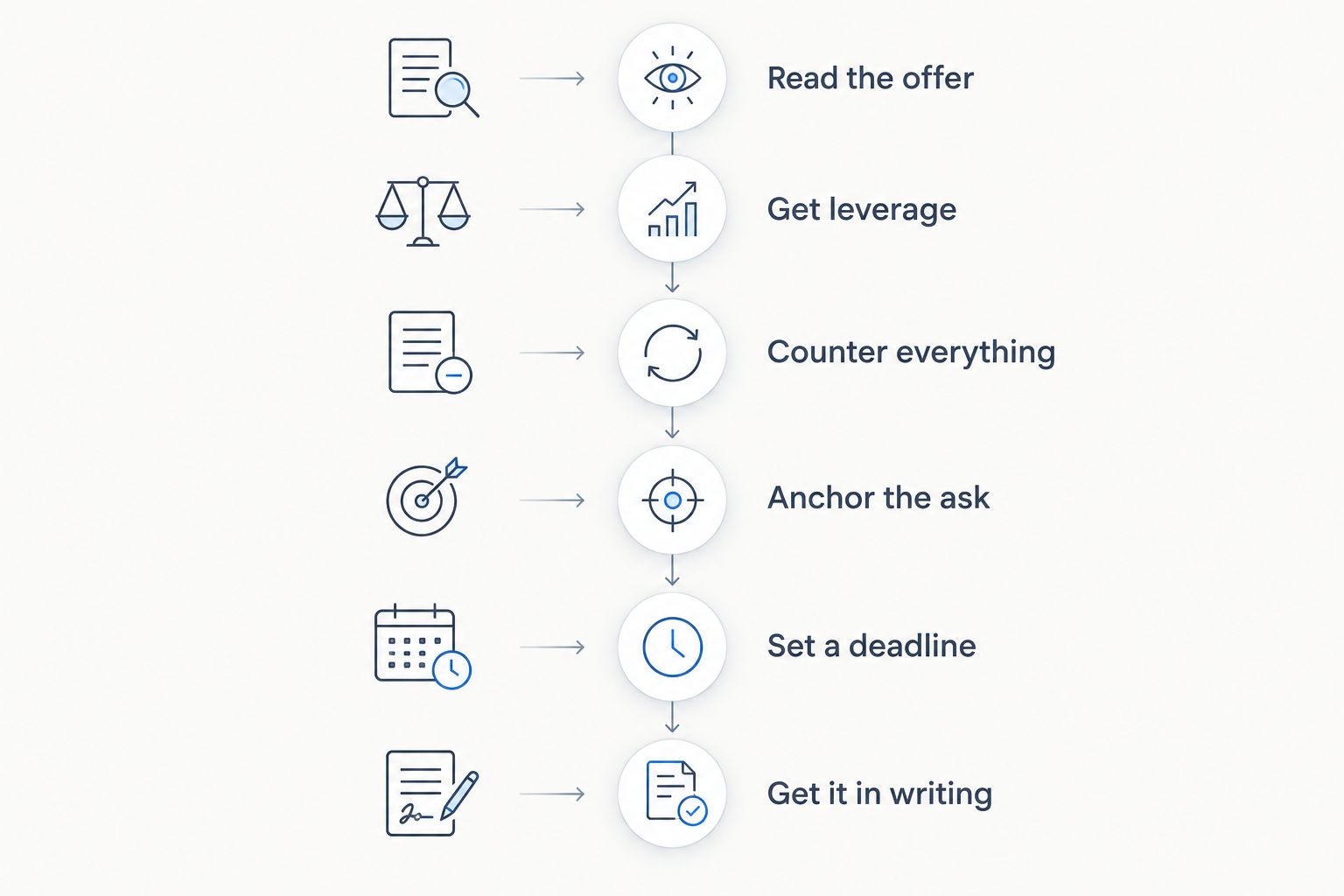
Work through the offer in this order once it lands in your inbox:
- Read every line before you respond. Base salary, bonus target (not guarantee - most hedge fund bonuses are discretionary), sign-on, vesting on any deferred comp, and start date. Don't counter until you know what's actually on the table.
- Get real leverage in writing. A competing offer, a documented comp benchmark from someone in a comparable seat, or a specific gap between your offer and the market you can point to. A gut feeling that you're worth more moves nothing on its own.
- Counter everything at once, in one message. Line-by-line negotiation over several days reads as indecision. One clear ask covering base, bonus target, and sign-on lands better than three separate emails.
- Anchor the ask to something concrete. Tie your counter to the competing offer or benchmark directly, not a round number that just sounds fair.
- Set a decision date that matches the fund's clock, not yours. Funds move fast once they've decided on a candidate; slow-playing your response reads as low interest, not leverage.
- Get the final terms in writing before you resign anywhere else. A verbal confirmation from a recruiter is not an offer letter.
This sequence mirrors the process QuantMinds runs with candidates before they send a counter on a hedge fund offer in 2026 - the steps don't change, only the specifics of your leverage do.
Negotiating a full-time analyst or researcher offer
Full-time offers at hedge funds are built around three numbers: base salary, a bonus target that's rarely guaranteed, and a sign-on that covers relocation or a lost bonus from your current employer. Base salary is the easiest lever to move because it's fixed and visible to whoever signs off on your hire. Bonus target is the hardest, because most funds tie it to a discretionary pool set well before individual offers go out.
If you want a sense of where researcher pay actually lands before you counter, check quant researcher pay at hedge funds so your ask is grounded in something real instead of a guess. QuantMinds coaching sessions review benchmarks like this with candidates before they send a counter.
Verdict: push hardest on base and sign-on for a full-time researcher offer - the bonus target is worth raising once, but it's the line least likely to move before you sign.
Negotiating an internship-to-full-time conversion offer
Conversion offers work differently because the fund has already spent a summer's worth of training and desk time on you, and replacing you means restarting the pipeline. That gives you real leverage, but it also means the offer usually arrives with less room on base - most funds convert interns at a standardized band tied to the intern class, not to an individual number.
The stronger ask on a conversion offer is start date, signing timeline, and desk placement rather than base salary. If a specific desk or strategy group matters to you, have that conversation before you sign, not after.
Verdict: negotiate placement and timing on a conversion offer - fighting over base against a standardized intern-class band rarely moves anything.
Negotiating against a competing offer
A real competing offer is the strongest leverage in any hedge fund negotiation, but it only works if it's specific and verifiable. Naming a fund, a role, and a comparable structure gives your target fund something concrete to respond to. Vague references to some other offer without detail get discounted immediately by recruiters who see the tactic constantly.
Timing matters here more than most candidates realize. Bring up a competing offer once you have it in writing, not while you're still interviewing elsewhere and hoping one materializes. If your processes are running on different clocks, understanding the hedge fund recruiting cycle helps you sequence which offer to push for leverage first.
Verdict: a documented competing offer is your best card in 2026's hedge fund hiring market - bluffing one is the fastest way to lose the desk's trust.
Why negotiation leverage varies
- Fund size and AUM stage. Larger, established funds have more room in the comp budget than a fund still building out its first few strategies.
- Strategy type. Systematic and quant strategies often run more standardized bands than discretionary funds, where a PM can move numbers on their own authority.
- How narrow the search was. A fund running a tight search for your specific skill set gives you more room than one that interviewed dozens of similar candidates.
- Whether you have a documented competing offer. This is the single biggest lever across every scenario above.
- Timing in the recruiting cycle. Early-cycle offers usually carry more flexibility than late-cycle offers made to fill a headcount gap before year-end.
- Your seniority. An experienced hire negotiating a lateral move has more leverage than a new graduate negotiating a first offer.
“Treat the offer letter as a first draft, not a final answer, and say so in writing - not over drinks with the recruiter.”
Should you negotiate a hedge fund offer if it's your only offer?
Yes, but keep the ask modest and specific without a competing offer to point to - a small, well-justified counter on base or start date rarely puts an offer at risk in 2026's hiring market. What you shouldn't do is invent leverage you don't have; recruiters compare notes across candidates and a bluffed competing offer is easy to catch.
Is it normal to negotiate a hedge fund job offer?
Yes - negotiating a hedge fund job offer is a normal, expected step at the analyst and associate level, not a red flag to the desk. Funds build some room into the initial number specifically because they expect a counter from strong candidates.
How long do you have to negotiate before a hedge fund offer expires?
Decision windows are set by the fund and vary by role and hiring urgency, so confirm the exact deadline with your recruiter rather than assuming a standard timeline. Ask for the deadline in writing the same day you receive the offer so you're negotiating against a known clock, not a guess.
Get coaching before you counter
1-on-1 prep on your specific offer, before you send a counter.
FAQ
How much should you counter a hedge fund offer by?
There's no fixed percentage that applies across hedge funds, since bands vary by fund size and strategy - anchor your counter to a documented competing offer or comparable pay data instead of a round number. A specific, sourced ask gets taken seriously; an arbitrary one usually gets a flat no.
Can negotiating a hedge fund offer get it pulled?
It's rare for a reasonable, well-anchored counter to get an offer pulled, since the fund has already invested significant interviewer time in you. Offers get pulled over aggressive ultimatums or fabricated leverage, not over asking for more.
Should you negotiate a hedge fund internship offer?
Internship offers have less room to negotiate than full-time offers because pay is usually standardized across the intern class. Focus any internship negotiation on start date or desk placement instead of base pay.
What should you negotiate besides salary in a hedge fund offer?
Start date, sign-on timing, desk or strategy placement, and vesting terms on any deferred compensation are all negotiable alongside base salary. These terms matter as much as the headline number in a hedge fund offer.
Do you need a competing offer to negotiate a hedge fund job?
No, a competing offer isn't required to negotiate a hedge fund job offer, but it's the strongest form of leverage when you have one. Without it, anchor your counter to comparable pay data instead of a vague request.
Who do you negotiate a hedge fund offer with?
You negotiate directly with the recruiter or HR contact who sent the offer, not the interviewers or the portfolio manager you met during the process. That contact relays your counter to whoever has authority over the final number.
Is it risky to negotiate a hedge fund offer as a new graduate?
It's lower risk than most new graduates assume, since funds expect some pushback even at entry level. The risk comes from unrealistic asks or ultimatums, not from a reasonable, specific counter.
One last thing
The biggest mistake candidates make isn't asking for too much - it's negotiating before the offer is actually signed. Testing enthusiasm and fit with the recruiter during later-round interviews is normal; treating that conversation as a negotiation before a written offer exists gets you nowhere and can read as presumptuous. Wait for the letter, then move fast.