

Quant researchers should negotiate a signing bonus using their written offer, credible alternatives, and any compensation they would forfeit by changing jobs—not a universal target or percentage. Repayment clauses and payment conditions can make a larger bonus less attractive than it looks. For a 2026 offer, request a specific adjustment you can justify, then compare the revised package on guaranteed compensation and contractual obligations.
- Quant researcher signing bonus negotiation starts with your written offer, not an unsupported market average.
- Compare guaranteed compensation separately from discretionary annual bonuses and conditional payments.
- Check signing bonus repayment terms before accepting a higher headline amount.
- QuantMinds provides quant career coaching for candidates targeting research, trading, and development roles.
How much signing bonus can quant researchers negotiate?
There is no universal signing bonus amount that every quant researcher can negotiate. Your counteroffer needs a basis specific to your situation: a competing written package, documented compensation you would lose, or a clear difference between the offer and what would make you accept.
Separate the signing bonus from the rest of the offer before choosing your ask. A promised annual bonus, a discretionary target, and a payment due after you start are not interchangeable. For the broader discussion, see how to negotiate a hedge fund job offer.
| Compensation component | Best for | Benefit | Limitation to check |
|---|---|---|---|
| Signing bonus | Addressing an upfront compensation gap | Adds a payment associated with joining | Payment timing and repayment conditions |
| Base salary | Improving recurring fixed compensation | Continues beyond the joining period | Does not establish future bonus payments |
| Written guaranteed bonus | Establishing compensation for a specified period | Makes an otherwise uncertain payment contractual | Eligibility, payment date, and employment conditions |
| Discretionary bonus | Assessing potential additional compensation | Adds compensation if awarded | A target is not a guaranteed payment |
| Make-whole payment | Replacing documented forfeited compensation | Addresses a specific loss from switching employers | What losses the agreement actually covers |
Use this comparison for a 2026 offer without treating it as a ranking. The right request depends on the problem you need to solve, not which component produces the largest headline.
Why this matters
A signing bonus answers an immediate question: what additional compensation accompanies your decision to join? It does not answer whether the role offers the right research responsibilities, manager, or longer-term compensation structure.
Keep those decisions connected. If you would reject the research mandate without the signing bonus, identify exactly what the payment changes—and what it leaves unresolved.
A useful negotiation ends with a package you understand and would accept. A larger payment attached to unclear obligations is not a complete answer.
Set your signing bonus request from evidence
Start with the written offer
List the base salary, signing payment, annual bonus language, start date, payment dates, and conditions. Mark each component as guaranteed, discretionary, or conditional according to the actual wording.
Do not fill gaps with assumptions from a recruiting conversation. Ask the employer to clarify whether a discussed payment is included in the offer and what must happen before it becomes payable.
Keep a separate list of unresolved terms. That prevents a negotiation about the signing bonus from obscuring an unanswered question about when you receive it.
Identify what your counteroffer solves
Choose a clear reason for requesting an adjustment. If you are leaving compensation behind, document the award and its forfeiture conditions. If another employer has offered a stronger guaranteed package, compare the written components rather than the headline total.
Personal expenses can help you set your private acceptance threshold. Do not present those expenses as evidence of what the employer pays other researchers.
Request an amount you can explain without inventing a market benchmark. An unsupported claim about what everyone else receives weakens the substance of the discussion.
Decide what would make you accept
Write down your preferred outcome, an acceptable alternative, and your decision if the employer declines. Keep those boundaries private unless sharing a specific condition helps move the discussion toward agreement.
Do not promise acceptance merely to encourage a revision. If research scope, location, or another offer remains unresolved, say so accurately.
For your 2026 negotiation, build the request around the offer currently in front of you. An old anecdote about a different role does not establish the terms you can obtain.
Compare your position before choosing the ask
You have competing written offers
Compare guaranteed compensation over matching periods. Confirm that both offers use the same start-date assumptions and distinguish cash payable after joining from compensation dependent on continued employment or performance.
Describe the difference accurately. An active interview process is not an offer, and a verbal indication is not a signed compensation commitment.
Ask whether the preferred employer can address the specific gap. Do not invent another firm's terms or imply that an expired offer remains available.
You would forfeit compensation by moving
Prepare the relevant award documents and explain what you lose by accepting the new role. Separate compensation already awarded from compensation you merely expect to receive.
Ask whether the employer will consider a make-whole arrangement and how it would be documented. Do not assume that a signing bonus automatically replaces every forfeited award.
Check both sides of the move. Your current employment documents establish what you lose; the new agreement establishes what replaces it.
You have no competing offer
You can still request an adjustment. Keep the discussion honest: explain your interest in the research role, identify the package issue, and ask whether there is flexibility.
Do not manufacture urgency or suggest that another employer is waiting. A clear request gives the recruiter something concrete to consider without creating a story you must maintain.
If the answer is no, return to your acceptance criteria. The absence of an increase does not decide whether the original offer meets your needs.
Why signing bonus requests differ
Assess these factors before deciding what to request. They are inputs to your decision, not a formula predicting an employer's response.
- Competing terms: A written alternative gives you an actual package to compare, rather than a reported market average.
- Forfeited compensation: Documented losses establish what you are asking the new employer to replace.
- Payment timing: A payment after joining serves a different cash-flow need from money available before a move.
- Repayment obligations: The amount you receive and the amount you could owe back are separate questions.
- Recurring compensation: An upfront payment does not permanently increase base salary or establish future discretionary awards.
- Acceptance conditions: Your request should reflect what would genuinely change your decision, including unresolved role details.
For a 2026 offer, keep this evidence in one comparison sheet. Use the employer's wording wherever a condition determines whether compensation is guaranteed.
How do you ask for a higher signing bonus?
Use a short sequence that makes the request easy to evaluate. You do not need a speech about how competitive quantitative finance is.
- Review terms. Read the written package and identify anything that needs clarification before discussing an increase.
- Document evidence. Collect competing terms or forfeited awards that directly support your request.
- Choose priority. Decide whether upfront cash, recurring salary, or contractual certainty matters most.
- Make request. State the adjustment you want, explain the reason, and confirm your interest in the role.
- Confirm revision. Review the updated written agreement before accepting or relying on changed terms.
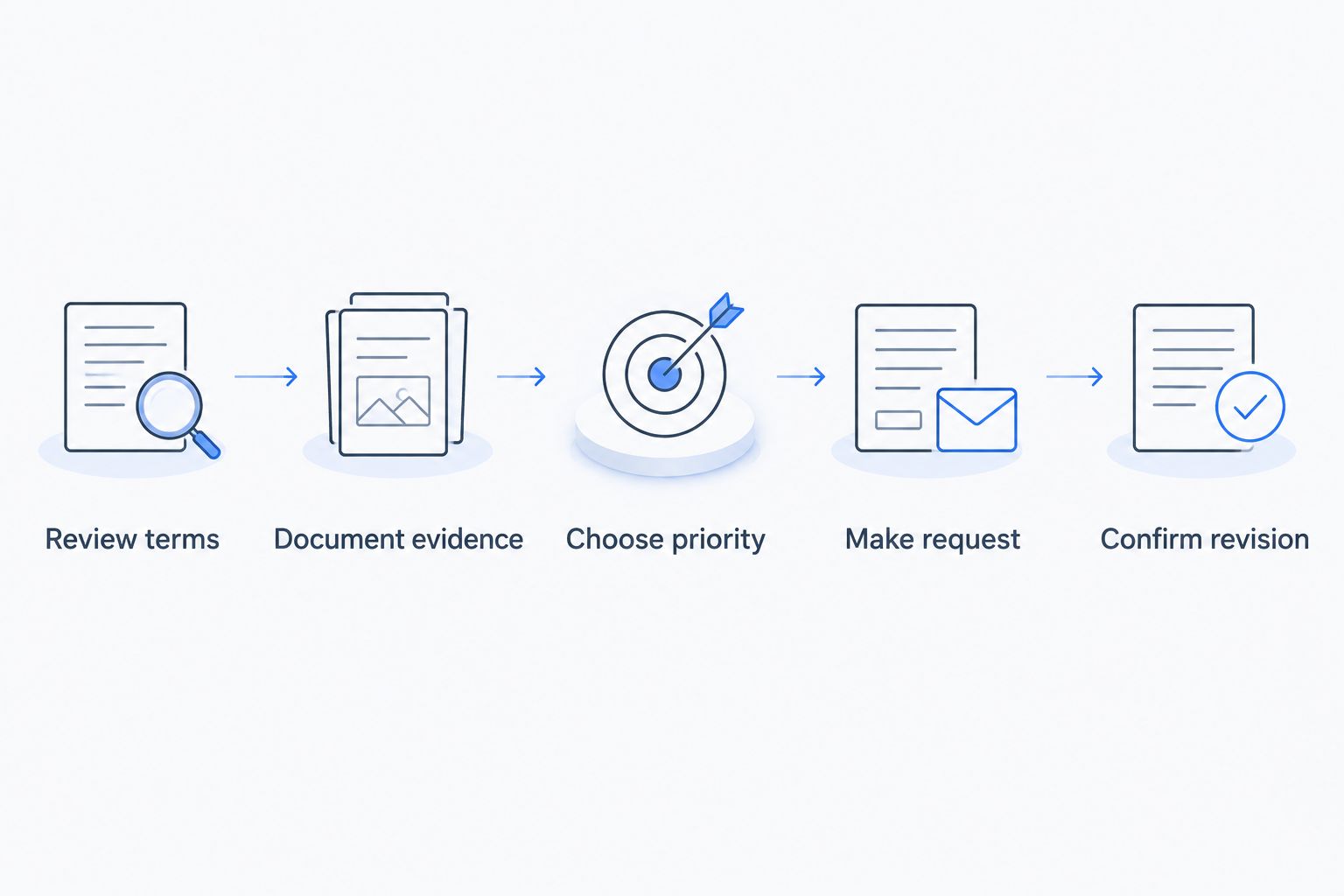
Keep the conversation focused. Explain the compensation gap, ask whether the employer can address it through the signing payment, and let the recruiter respond before proposing unrelated changes.
If the recruiter asks whether a revision would secure your acceptance, answer truthfully. Distinguish a genuine acceptance condition from a preference you are still weighing.
What should you check in a signing bonus clawback?
A clawback is a repayment provision. Read the actual clause rather than assuming that every employer uses the same conditions.
Ask what triggers repayment, when the obligation ends, and whether the amount reduces over time. Check how the agreement treats resignation, termination, and any other circumstances it expressly addresses.
Also clarify whether repayment concerns the gross payment or the cash you received after withholding. Tax treatment and contractual repayment obligations require separate review; get qualified tax or legal advice where needed.
Do not treat a conditional signing payment as unrestricted cash. Before accepting, understand the obligation you would take on if the employment relationship ends under the circumstances named in the agreement.
Is a higher signing bonus better than a higher salary?
A higher signing bonus is better suited to an upfront gap; a higher base salary addresses recurring fixed compensation. Neither is automatically the better concession.
Compare the alternatives over the same period and include the conditions attached to each. Do not count a signing payment again in later years or assume discretionary bonuses will repeat.
If you expect to stay beyond the initial compensation period, examine what the package looks like after the signing payment disappears. Keep research fit and contractual restrictions in the decision, too.
Can you negotiate after accepting the offer?
The clearest point to negotiate is before acceptance, while the package remains under discussion. After accepting, review what you agreed to before asking to reopen compensation.
If a material fact changes, explain it directly and identify the specific issue. Do not present a new preference as though the employer omitted an agreed term.
Avoid accepting solely to preserve an option while planning an immediate counteroffer. Make the compensation discussion part of your decision rather than an undisclosed condition afterward.
When career coaching fits—and where it stops
QuantMinds is best for candidates seeking career coaching for quantitative research, trading, and development roles. Its services include resume review, interview preparation, and one-on-one coaching, and the firm was founded by a former UC Berkeley MFE program executive director.
Use QuantMinds when your broader problem is presenting your background, preparing for recruiting, or planning a move into quant finance. Career coaching is not a substitute for an employment lawyer reviewing a repayment clause or a tax adviser assessing your circumstances.
Before booking any service, confirm that its scope matches your immediate question. Preparing for interviews and interpreting an employment contract are different tasks.
FAQ
How much signing bonus should I ask for as a quant researcher?
Ask for a specific adjustment supported by your written alternatives, documented forfeited compensation, or acceptance criteria. There is no universal amount that applies to every quant researcher.
Can I negotiate a quant signing bonus without another offer?
Yes, you can request an adjustment without claiming to have a competing offer. Explain the package issue clearly and ask whether the employer has flexibility.
Should I negotiate salary or signing bonus first?
Prioritize the component that solves your actual problem: base salary for recurring fixed compensation or a signing bonus for an upfront gap. Compare the full revised package before agreeing.
Does a guaranteed annual bonus count as a signing bonus?
No, a guaranteed annual bonus and a signing bonus are separate compensation components unless the written agreement expressly combines them. Compare their payment dates and eligibility conditions.
Do I have to repay my signing bonus if I leave?
Your agreement determines whether leaving triggers repayment. Read the repayment clause and obtain qualified legal advice if its meaning or consequences are unclear.
Should I tell a recruiter about a competing offer?
Describe a competing offer accurately if you choose to use it to support your request. Compare written terms and do not misrepresent an interview process as an offer.
Can QuantMinds help me prepare for quant recruiting?
QuantMinds provides resume review, interview preparation, and one-on-one career coaching for candidates targeting quantitative research, trading, and development roles. Confirm the service scope before booking.
One last thing
Before accepting a 2026 offer, write down when the signing bonus becomes payable, what conditions attach to it, and what happens if you leave. Then check each answer against the agreement—not your memory of the recruiting call.
Negotiate the payment and understand the obligation. The headline amount is only part of the decision.