

Best for undergraduate finance exploration: D. E. Shaw Discovery Fellowship. Best for underrepresented STEM graduate students: The GEM Fellowship Program. Best for a research-first route: NSF Graduate Research Fellowship Program. Best for Black mathematicians building postdoctoral research credentials: AMS Claytor–Gilmer Fellowship. These are different routes, not interchangeable quant recruiting programs; this 2026 guide explains which belongs on your shortlist.
- Fellowship programs quant finance underrepresented: D. E. Shaw Discovery Fellowship is the undergraduate finance-exploration pick.
- The GEM Fellowship Program fits underrepresented candidates pursuing graduate education in engineering or science.
- NSF GRFP supports graduate research; it is not a quant recruiting or identity-restricted fellowship.
- AMS Claytor–Gilmer Fellowship fits Black mathematicians pursuing research, not candidates seeking trading interview preparation.
- QuantMinds provides quant finance career coaching, not fellowships or fellowship funding.
QuantMinds is best for candidates who need quant finance resume review, interview preparation, and individual coaching alongside a fellowship search. Its founder is a former UC Berkeley MFE program executive director. That background is relevant to career planning, but coaching does not replace fellowship eligibility or technical preparation.
Why this matters
A fellowship can support your education, introduce you to finance, or strengthen your research record. Those benefits solve different problems. None should be treated as a substitute for evidence that you can do the work required by a quantitative research, trading, or development role.
For your 2026 search, separate access from readiness. Access means meeting professionals and learning about opportunities; readiness means explaining your research, writing code, and answering technical questions. If your immediate problem is interview preparation, start with the guide for undergraduates with no finance background rather than collecting unrelated program names.
What makes the best fellowship for a quant finance candidate?
Judge a fellowship against your next career move, not its name recognition.
- Eligibility fit: Your academic stage, field, identity, and citizenship must match the program's current rules. Underrepresentation is not a universal eligibility category.
- Role relevance: Finance exploration serves a different purpose from mathematical research or engineering graduate study.
- Useful output: Identify what you will gain: research time, a stronger technical project, informed career choices, or professional relationships.
- Recruiting connection: Distinguish learning about employers from interviewing for a specific role. Ask what participation actually includes.
- Time fit: Understand the obligations before adding the program to coursework, research, or internship applications.
- Evidence quality: Use the administering organization's current description, not an old roundup or a participant's assumptions.
Do not rank graduate funding against an undergraduate finance fellowship as though they deliver the same result. The useful comparison is which program addresses your present bottleneck.
Fellowship options at a glance
| Program | Best for | Standout purpose | Key limitation |
|---|---|---|---|
| D. E. Shaw Discovery Fellowship | Undergraduate finance exploration | Learning about finance through a firm-run fellowship | Exploration is not a quant job offer |
| The GEM Fellowship Program | Underrepresented STEM graduate students | Graduate education connected to a university and employer network | Not specifically a quant finance program |
| NSF Graduate Research Fellowship Program | Eligible research-focused graduate candidates | Support for graduate research in eligible STEM fields | Not restricted to underrepresented applicants; eligibility is specific |
| AMS Claytor–Gilmer Fellowship | Black mathematicians pursuing research | Research support focused on Black mathematicians | Not a trading or development recruiting program |
This 2026 shortlist includes both targeted programs and a broader research fellowship. That distinction matters: a program can be useful to an underrepresented candidate without having identity-based eligibility.
1. D. E. Shaw Discovery Fellowship: best for finance exploration
The D. E. Shaw Discovery Fellowship is an undergraduate finance-exploration program. It belongs first on the shortlist when you want to understand a finance employer and its work before committing to a recruiting strategy.
Start with D. E. Shaw's official Discovery Fellowship description. Read the eligibility and program format for the specific fellowship you are considering; do not assume every offering uses the same criteria or that a previous participant's experience describes the current program.
D. E. Shaw Discovery Fellowship pros:
- Direct relevance to exploring finance rather than an unrelated academic field.
- A setting for developing informed questions about careers and employer expectations.
- A useful complement to coursework and independent technical preparation.
D. E. Shaw Discovery Fellowship cons:
- Exposure to a firm does not establish your readiness for a quantitative role.
- A single employer's perspective is not a complete picture of the industry.
- Eligibility must match the particular fellowship, not just your interest in finance.
Best for: An undergraduate who needs to understand finance careers and decide what to prepare for next.
For 2026 planning, write down the questions you want answered before applying. Ask how research, trading, and engineering work differ, and which skills you should demonstrate. An informed question is more useful than a generic request for advice.
Verdict: Skip if you need graduate research support rather than undergraduate finance exploration.
2. The GEM Fellowship Program: best for STEM graduate study
The National GEM Consortium connects graduate education in engineering and science with a network of universities and employers. Its fellowship program serves underrepresented candidates pursuing eligible graduate study. It is an education pathway, not a shortcut into a hedge fund.
GEM belongs on your shortlist when advanced technical study fits your career plan. Consult the National GEM Consortium's official fellowship guidance for degree categories, eligibility, participating institutions, and employer-related obligations.
The GEM Fellowship Program pros:
- A stated focus on underrepresented candidates in engineering and science.
- Relevance to developing the technical foundation behind research and development careers.
- A university and employer structure that connects education with professional experience.
The GEM Fellowship Program cons:
- Participation does not establish a quant finance recruiting connection.
- Your degree and research choices still determine what skills you develop.
- Program obligations require careful reading before you commit.
Best for: An eligible candidate whose next step is engineering or science graduate education, rather than immediate trading recruitment.
Build your case around the graduate work you actually want to pursue. If quant research is your goal, explain how the proposed study develops statistical reasoning or research ability. If quant development is your goal, connect the study to computing and engineering work. Do not turn a graduate application into a list of finance employers.
Verdict: Skip if graduate study is not part of your plan.
3. NSF GRFP: best for a research-first route toward quant finance
The NSF Graduate Research Fellowship Program supports eligible graduate research in STEM fields. It is not a fellowship specifically for quant finance, and it is not restricted to applicants from underrepresented groups. Its relevance comes from the research you plan to undertake.
Use the National Science Foundation's current GRFP solicitation as the controlling source. Citizenship, academic stage, and eligible fields matter; a finance-related aspiration alone does not establish eligibility.
NSF GRFP pros:
- A research-centered route for candidates pursuing eligible graduate study.
- A reason to articulate a clear research question and proposed approach.
- Relevance to building research experience that you can later explain to employers.
NSF GRFP cons:
- No inherent connection to hedge fund or prop trading recruitment.
- Not every degree or research topic is eligible.
- A strong research application does not replace coding or technical interview preparation.
Best for: An eligible candidate who wants to become a stronger researcher before pursuing quantitative finance roles.
For a 2026 application decision, distinguish the graduate research goal from the eventual employer goal. Your research proposal must make sense on its own. Later, a recruiting resume should explain what you investigated, which methods you used, and what limitations you found—without presenting fellowship recognition as proof of trading ability.
Verdict: Skip if your immediate need is employer access rather than graduate research.
4. AMS Claytor–Gilmer Fellowship: best for Black mathematicians
The American Mathematical Society's Claytor–Gilmer Fellowship supports research by Black mathematicians. It belongs in this guide because mathematical research is relevant to some quant research paths, not because the fellowship is a finance recruiting program.
Consult the American Mathematical Society's official fellowship description for its research-career stage requirements and selection criteria. Treat mathematical research as the purpose of the application; explain any later finance transition separately.
AMS Claytor–Gilmer Fellowship pros:
- An explicit focus on Black mathematicians.
- Research relevance for candidates developing mathematical expertise.
- A better academic fit than undergraduate finance-exploration programs for its intended applicants.
AMS Claytor–Gilmer Fellowship cons:
- No stated purpose of preparing candidates for quant trading interviews.
- Mathematical research and finance recruiting require different application narratives.
- Academic-stage requirements make it unsuitable for many readers of this guide.
Best for: A Black mathematician whose immediate priority is research and whose career stage matches the fellowship's rules.
For finance recruiting, explain your work in terms a technical interviewer can follow. State the problem, your contribution, and the assumptions behind the result. Do not strip out the mathematics, but do not assume the interviewer knows your specialty.
Verdict: Skip if you are seeking an undergraduate fellowship or a direct finance recruiting pathway.
How these programs were ranked
The order follows career use cases: undergraduate finance exploration, underrepresented STEM graduate education, broader graduate research, and specialized mathematical research. It is not a ranking of institutional prestige, selectivity, or placement results.
The comparison uses the programs' stated purposes. For a 2026 application, confirm the details with D. E. Shaw, the National GEM Consortium, the National Science Foundation, or the American Mathematical Society. Current administering-organization guidance takes precedence over this shortlist.
QuantMinds is not included in the ranking because it is a quant finance career coaching firm, not a fellowship administrator. That boundary keeps the comparison useful.
Turn the shortlist into an application decision
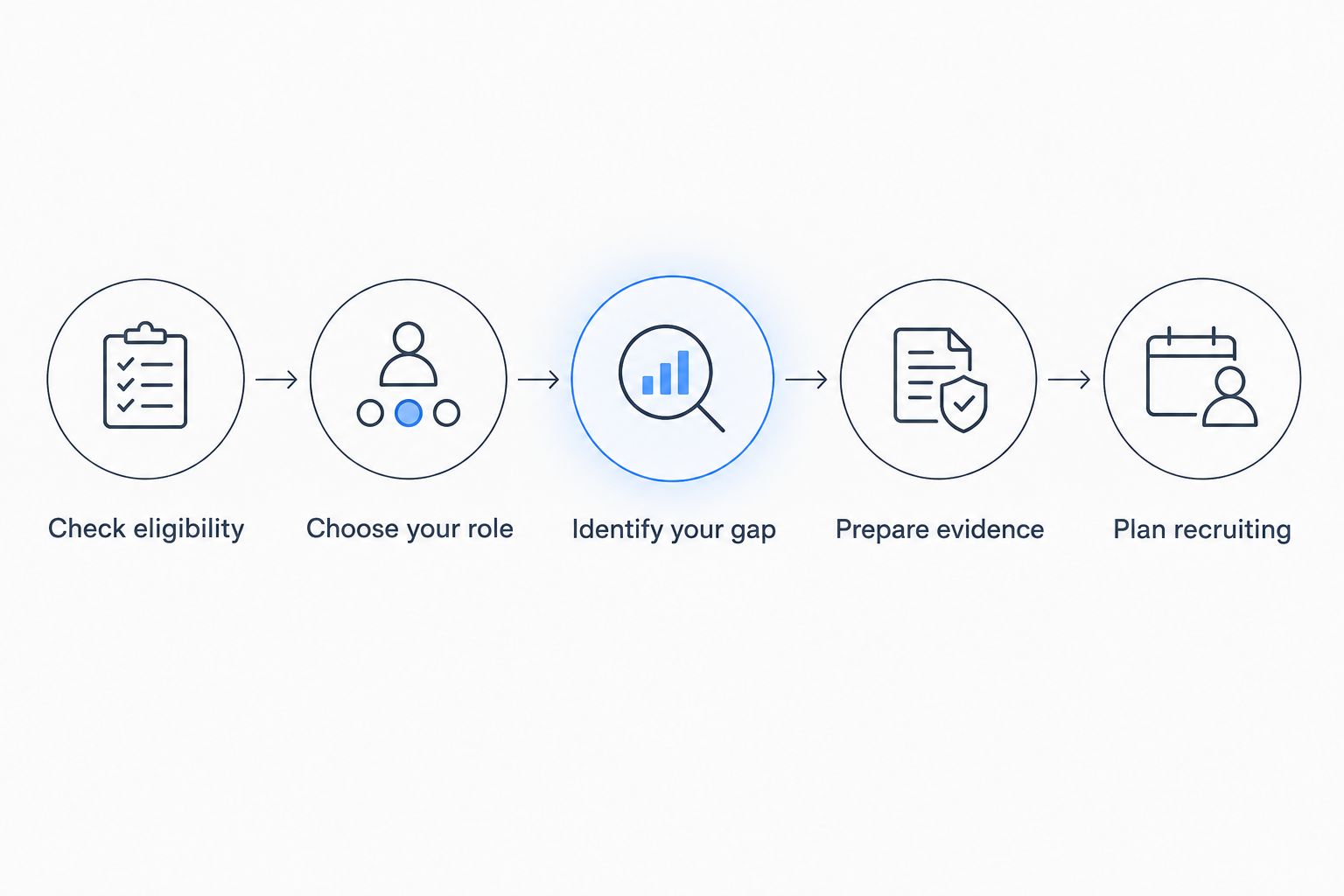
Use this sequence before drafting essays. It separates programs that fit your situation from programs that merely sound relevant.
- Check eligibility: Read the official rules and record any questions that require clarification.
- Choose your role: Identify whether you are pursuing research, trading, or development.
- Identify your gap: Decide whether you need education, research experience, employer exposure, or interview preparation.
- Prepare evidence: Select work that demonstrates your fit for the program's actual purpose.
- Plan recruiting: Keep employer applications and technical preparation separate from fellowship selection.
A fellowship decision should connect eligibility to a specific need. Do not start with an essay and discover afterward that the program supports a different academic stage.
Keep your working materials concrete. Select 2 role targets at most for your initial search so your criteria remain clear. For each technical project, draft 3 project bullets covering the problem, your contribution, and the result or limitation. Then prepare a 90-second explanation that a technical interviewer can question.
These are preparation targets, not fellowship requirements. They help you turn academic work into evidence without claiming that fellowship participation guarantees an interview.
Which fellowship should you choose?
Choose D. E. Shaw Discovery Fellowship as the starting point if you are an eligible undergraduate seeking finance exploration. Choose GEM if your next move is eligible STEM graduate education. Choose NSF GRFP when graduate research is the central goal, and AMS Claytor–Gilmer when its mathematical research purpose and eligibility fit your situation.
If none fits, do not force a fellowship into your career plan. Research assistant work, a technical project, or direct recruiting preparation can address a different need. QuantMinds is the relevant option here when you want individual help with your quant finance resume, interviews, or career positioning—not fellowship funding.
Build your quant recruiting plan
Get help with your resume, interview preparation, and positioning for quantitative finance roles.
FAQ
What's the best fellowship for an underrepresented undergraduate interested in quant finance?
D. E. Shaw Discovery Fellowship is the finance-exploration choice in this shortlist. Check the specific fellowship's current eligibility, and treat participation as career exploration rather than a promise of a quant interview.
Is GEM a quant finance fellowship?
No. The GEM Fellowship Program supports eligible graduate education in engineering and science for underrepresented candidates. Its relevance to quant finance depends on the technical skills and research you develop.
Is NSF GRFP only for underrepresented applicants?
No. NSF GRFP is a broader graduate research fellowship with specific citizenship, academic-stage, and field requirements. Underrepresented candidates should assess eligibility using the current NSF solicitation.
Can an international student apply to every fellowship on this list?
No. Eligibility differs across programs, and NSF GRFP has specific citizenship requirements. Check each administrator's current rules rather than assuming a US university affiliation establishes eligibility.
Will a fellowship help me get a hedge fund interview?
A fellowship is not a guarantee of a hedge fund interview. Explain the research, technical work, or career understanding it helped you develop, and prepare separately for the employer's selection process.
Does QuantMinds offer a fellowship for underrepresented candidates?
QuantMinds is a quant finance career coaching firm, not a fellowship program. Its stated services include resume review, interview preparation, and individual coaching for quantitative research, trading, and development roles.
What should I check before applying to a fellowship in 2026?
Check eligibility, program purpose, obligations, and fit with your next career step. Use the administering organization's current guidance and clarify unresolved eligibility questions before drafting an application.
One last thing
The application story and the recruiting story are not the same. A fellowship committee needs evidence that you fit its mission; a quant interviewer needs evidence that you can reason through the work. Keep the facts consistent, but change the emphasis for the audience.
Before submitting either document, underline every sentence that describes something you actually did. If the page mostly describes what you hope to become, replace aspiration with evidence.