

Yes, a quant developer job is stressful when you own live trading systems, face urgent production failures, or work against demanding research deadlines—but the job title alone does not tell you how much pressure to expect. For your 2026 job search, assess the actual responsibilities, support arrangements, and manager expectations rather than assuming every hedge fund or prop trading role has the same working conditions.
- Is quant developer job stressful? Yes, especially when live-system responsibility comes without clear support or recovery procedures.
- Compare production ownership, research deadlines, and on-call expectations before accepting a quant development role.
- QuantMinds offers quant career coaching for candidates who want help with positioning and interview preparation.
- Ask for recent examples of incidents and deadline changes, not general assurances about work-life balance.
Is a quant developer job stressful?
The pressure depends on what your code supports and what happens when it fails. A developer maintaining live execution software faces a different problem from a developer building research tools: restoring a trading connection is not the same assignment as improving a backtesting library.
Separate career fit from recruiting difficulty. If you are moving from software engineering, the guide to quant career coaching for software engineers addresses that transition; the comparison below helps you evaluate the work itself.
These are responsibility patterns, not promises about particular employers. A single position can combine several.
| Responsibility pattern | Best for | What makes the work appealing | Where pressure comes from | What to verify |
|---|---|---|---|---|
| Live trading systems | Engineers who enjoy operational ownership | Direct connection between software behavior and trading operations | Failures requiring immediate diagnosis and safe recovery | Escalation, deployment authority, and backup coverage |
| Research tooling | Engineers who enjoy scientific collaboration | Building tools that help researchers test ideas | Changing requirements and disagreement about correct implementation | Who defines acceptance criteria and resolves conflicting requests |
| Data infrastructure | Engineers who enjoy reliability and data quality | Making datasets usable and reproducible | Broken feeds, incorrect data, and downstream dependencies | Data validation, ownership boundaries, and incident handling |
| Shared development platforms | Engineers who enjoy reusable systems | Improving tools used across teams | Competing priorities and migration responsibilities | Roadmap control, support expectations, and adoption ownership |
Do not treat research infrastructure as automatically relaxed or execution development as automatically unsustainable. A defined production responsibility is easier to evaluate than an undefined promise that everyone helps out.
Why this matters
An attractive title tells you little about your daily interruptions, decision-making authority, or ability to disconnect. Those details determine whether a demanding role fits the way you want to work.
For a 2026 application, write down what you want to build before deciding which firms to target. Someone who enjoys systems debugging but dislikes open-ended research requests needs a different assignment from someone who wants close collaboration with researchers and uninterrupted development time.
Your goal is not to find a job with no pressure. It is to distinguish pressure you want to take on from working conditions you do not want to accept.
Live trading systems: evaluate responsibility and recovery
Live-system work puts operational correctness at the center of the job. If your software sends orders, processes market data, or supports trading decisions, a failure demands a controlled response—not just a clever fix.
The appeal is concrete ownership. You can investigate system behavior, improve reliability, and see why an engineering decision matters. The downside is interruption when a production issue takes priority over planned development.
Ask who can stop a deployment, disable a component, or escalate a trading-impacting problem. Responsibility without the authority to act is a poor arrangement, regardless of how interesting the technology sounds.
Best for: engineers who want operational ownership and a team with explicit recovery procedures. Ask the hiring manager to describe a recent incident from detection through resolution. Listen for named responsibilities rather than an account of individual heroics.
Research tooling: evaluate ambiguity and competing requests
Research development involves turning an analytical objective into software that produces interpretable results. A request to improve a backtest needs agreement about inputs, assumptions, validation, and what counts as an acceptable implementation.
That collaboration is appealing if you enjoy asking technical questions and refining an approach. It becomes frustrating when priorities change without an explicit decision about which existing work stops.
Ask how developers and researchers handle disagreement over results. A useful answer explains how the team checks data, examines assumptions, and distinguishes an implementation defect from a research hypothesis that did not hold up.
Best for: engineers who enjoy analytical collaboration and can work with evolving requirements. The trade-off is less certainty about the finished specification. Verify that the team has a way to settle scope before committing to a deadline.
Data and platform work: evaluate dependency pressure
Data and platform roles deserve the same scrutiny as trading-facing positions. A service does not need to submit orders directly to have important downstream users.
The attraction is reusable engineering: a data validation improvement or a better development tool can support multiple workflows. The downside is competing demands from users whose priorities do not automatically agree.
Ask who owns a problem when it crosses team boundaries. For example, if a research result changes after a dataset update, who investigates the source, checks transformations, and communicates the correction?
Best for: engineers who enjoy reliability, interfaces, and shared infrastructure. Do not accept an assignment described as platform development until you understand whether it includes routine user support, production incidents, and responsibility for migrating existing systems.
Why quant developer stress varies
Use these factors to structure your questions. They describe work arrangements you can investigate, not a numerical stress score or a ranking of employers.
- Production exposure: Establish whether you build offline tools, maintain live services, or do both. Ask what interrupts planned work.
- Support coverage: Identify who responds when you are unavailable and whether escalation responsibilities are written down.
- Deadline control: Find out who commits the team to delivery dates and what changes when urgent work arrives.
- Decision authority: Check whether the person responsible for reliability can delay an unsafe release or challenge an incomplete specification.
- Technical safeguards: Ask about testing, monitoring, rollback procedures, and how the team checks data correctness.
- Management behavior: Request examples of how the manager handled a mistake, a missed deadline, and conflicting requests.
Evaluate combinations, not isolated perks. Flexible working arrangements do not answer whether you must respond outside agreed hours. Interesting projects do not answer whether your manager protects development time.
How do you assess stress before accepting an offer?
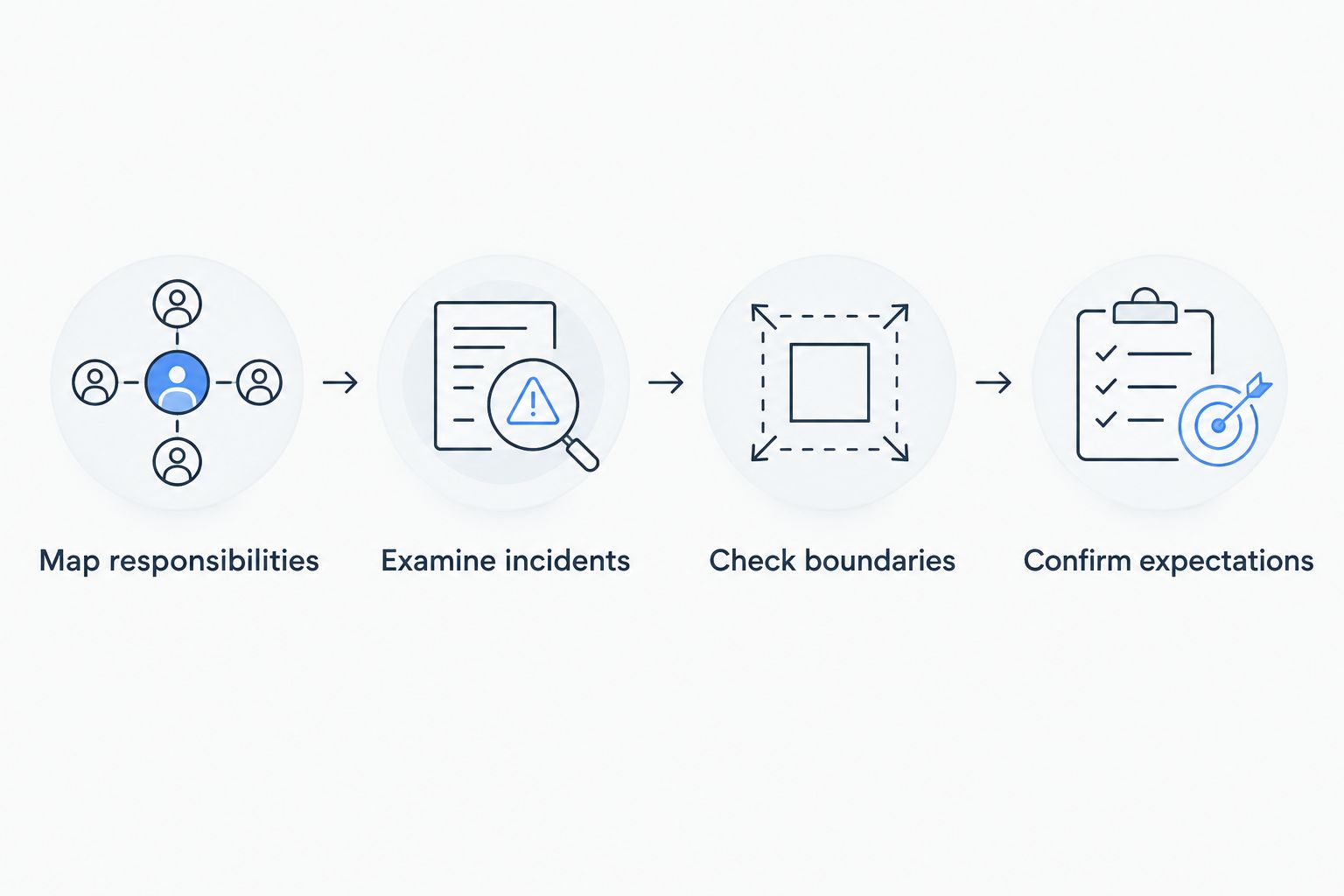
For a 2026 offer review, follow the same sequence for each team: understand the work, examine an incident, establish boundaries, and confirm expectations. That keeps employer reputation from replacing evidence.
Map responsibilities
Ask the manager to walk through the role's recurring tasks. Separate planned development, production support, research collaboration, and maintenance instead of accepting a broad description such as working closely with the trading team.
Request an example of a recently completed project. Find out who wrote the requirements, who reviewed the code, and who owned the system after release.
Examine incidents
Ask for a recent production failure or serious defect and how the team responded. You do not need confidential trading details to understand detection, escalation, communication, and recovery.
Listen for a repeatable process. If the explanation depends entirely on a particular employee being available, ask what happens during that person's absence.
Check boundaries
Ask directly about expected availability, scheduled support, handoffs, and messages outside agreed working hours. Distinguish an occasional exceptional event from a responsibility that belongs to the role.
Do not translate flexibility into a policy the manager has not described. Repeat your understanding back and ask the manager to correct it.
Confirm expectations
Write a short summary of your understanding before accepting. Include the main development responsibilities, support obligations, reporting line, and how priorities are set.
Use that summary to resolve contradictions between interviewers. A difference between the manager's account and a developer's account needs an explanation, not an optimistic interpretation.
What should you ask in the interview?
Reserve 10 minutes of your next hiring-manager conversation for working conditions. This is a suggested discussion budget, not an estimate of interview length. Ask specific questions and leave room for follow-ups.
- What interrupts a developer's planned work, and who decides that the interruption takes priority?
- Who owns production support when the primary developer is unavailable?
- What happened after a recent release caused an unexpected problem?
- How do you resolve competing requests from researchers or traders?
- What does a developer do when a deadline conflicts with testing requirements?
- How is performance assessed when infrastructure work does not produce a visible research result?
A concrete answer describes an event, an owner, and a decision. An answer about hiring smart people does not explain the operating process.
Afterward, spend 15 minutes recording what you learned. Mark each point as confirmed, unclear, or contradictory. This is a personal review exercise, not a scoring system with a validated cutoff.
How can you prepare without accepting constant pressure?
Preparation should help you reason clearly under constraints, not teach you to tolerate unclear expectations. Practice explaining a failure, choosing a safe response, and communicating what you know before you know everything.
Use a 30-minute practice session to walk through a software problem: describe the symptom, identify what you would inspect, and explain how you would verify a correction. Treat the duration as a planning suggestion, not a hiring standard.
Bring examples from your actual experience. A careful explanation of testing, debugging, or handling conflicting requirements is more useful than claiming you thrive under pressure without evidence.
QuantMinds offers quant development career coaching through resume review, interview preparation, and 1-on-1 coaching. QuantMinds is best for quant development candidates who want individual help with application positioning and interview preparation. Coaching helps you prepare your questions; it does not establish how a prospective employer actually runs its team.
Is quant development more stressful than software engineering?
Quant development is not automatically more stressful than software engineering; compare operational responsibility and working arrangements. A software engineering role with demanding incident coverage is not a low-pressure baseline simply because it sits outside finance.
For your 2026 career decision, compare actual assignments rather than sectors. Ask the same questions about release control, interruptions, availability, and management in both interviews.
Can you have work-life balance as a quant developer?
Work-life balance requires clear availability expectations and support coverage, not a reassuring job title. Establish when you are expected to respond, how absences are covered, and who handles urgent work outside your agreed schedule.
Make your own boundaries explicit before accepting. If the team cannot describe how those boundaries fit the role, the uncertainty remains unresolved.
Should you avoid quant development if you dislike stress?
Avoid responsibilities that conflict with your boundaries, not the entire quant developer category. If urgent incident response is unacceptable to you, ask specifically about production ownership rather than assuming a research-oriented title excludes it.
For a 2026 search, choose target roles by the work you want to own. You do not need to present constant availability as enthusiasm for quantitative finance.
FAQ
Is quant developer job stressful even if I am good at coding?
Yes, strong coding skills do not remove pressure from production incidents, conflicting requests, or unclear expectations. Evaluate the team's working arrangements as carefully as its technical requirements.
Do quant developers have to work long hours?
The title does not establish working hours. Ask the specific team about agreed availability, support coverage, deadline changes, and work outside the normal schedule.
Is research tooling less stressful than live trading development?
Research tooling involves different pressure, not a guarantee of less pressure. Compare changing requirements and research deadlines with the incident responsibilities of the live trading role.
What's the best quant developer role for work-life balance?
The best fit is a role with availability expectations and support responsibilities that match your boundaries. Verify those arrangements with both the hiring manager and a prospective teammate.
Does a smaller trading firm mean more stress?
Firm size alone does not establish stress. Ask who covers absences, who owns incidents, and whether responsibilities extend beyond the advertised development work.
Can interview preparation tell me whether I will enjoy quant development?
Interview preparation helps you assess technical readiness, but it does not reproduce a team's daily working conditions. Investigate the actual responsibilities alongside your preparation.
Can QuantMinds help me prepare for quant developer recruiting?
QuantMinds provides resume review, interview preparation, and 1-on-1 coaching for quantitative development candidates. Use coaching to improve your preparation, then verify employer-specific working conditions directly with the hiring team.
One last thing
Ask who can stop a release—not just who fixes it afterward. That question connects responsibility, authority, and engineering judgment in a way that a general question about culture does not.
An employer does not need to promise a pressure-free job. You need a clear account of the pressure you are accepting and the support available when something goes wrong.