

Yes. Hedge funds can hire quant researchers without a master’s degree; the degree is not a universal requirement. What matters is whether you meet the requirements of a particular research role and can demonstrate the mathematical, coding and research skills it calls for. In 2026, read the job description before deciding that an MFE is your only route in.
- Do hedge funds hire without a masters degree? Yes; check each quant researcher role’s stated requirements.
- A research project is stronger evidence when you can explain its assumptions, testing and limitations.
- An MFE can help fill a skill gap, but it does not replace evidence of research ability.
Do hedge funds hire quant researchers without a masters?
Yes, if the role does not require one and your application shows the skills the team needs. A degree title alone does not answer whether you can formulate a research question, work with data and defend your conclusions. Conversely, strong projects do not override an explicit degree requirement. Start with the posting, then decide what evidence you can put in front of a reviewer.
| Route | Best for | What you can show | What you still need to address |
|---|---|---|---|
| Bachelor’s degree plus research work | Applicants with relevant projects, internships or research experience | A clear question, a reproducible method and your own contribution | Why your work prepares you for this specific role |
| Master’s or MFE | Applicants who need more structured study or a different recruiting route | Relevant coursework alongside projects and experience | Whether you can apply the material to an unfamiliar research problem |
| PhD or other advanced research training | Applicants whose research background matches the role | Independent research methods and technical depth | How that work transfers to the team’s problems |
These are ways to present a background, not a ranking of credentials. If you are still building relevant experience, how to get a quant internship without a target school addresses a related question: how to make a credible application when a familiar school name is not doing the work for you.
Why this matters
The question is not whether every hedge fund accepts a bachelor’s degree. It is whether the roles you want accept your degree and whether your application makes a research case. A posting that explicitly asks for graduate training needs a different decision from one that lists technical skills and leaves the degree open.
That distinction matters in 2026 if you are weighing applications against another degree. Do not enroll solely because you assume a master’s is the admission ticket to every quant research role. First, collect roles you would actually pursue. Separate firm requirements from skills you can demonstrate now and skills you still need to develop.
A second distinction is between being eligible and being persuasive. You can satisfy a degree requirement and still present a vague resume. You can also have substantial technical work that a reviewer cannot identify because the project description says little beyond the tools used. The fix is not to claim a credential you lack; it is to make your contribution legible.
What can you show instead of a master’s degree?
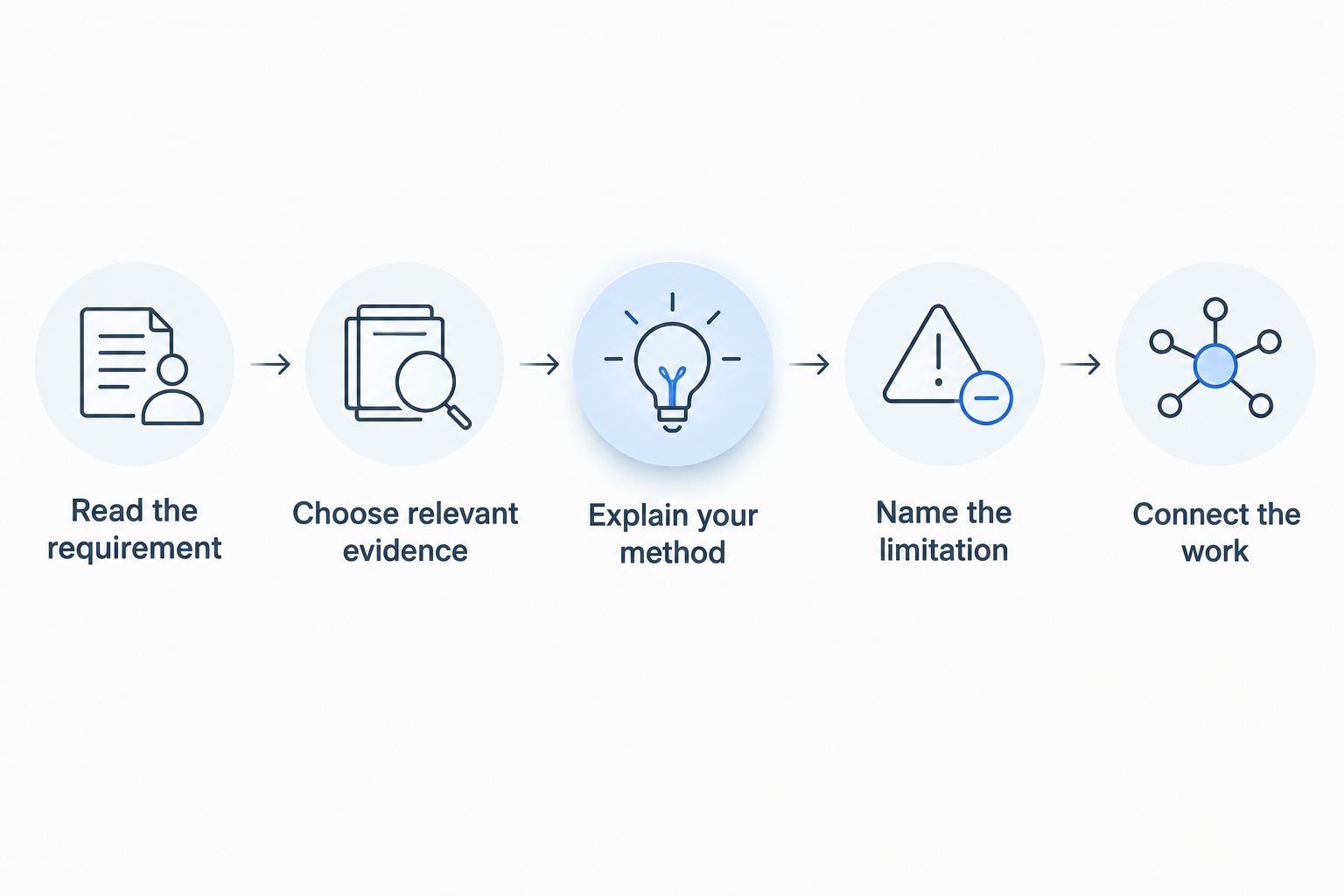
Build an application around work you can explain under questioning. In 2026, a project should do more than add a finance keyword to your resume: it should let someone see how you framed a problem, tested an idea and handled an inconvenient result. Use this sequence before you submit an application.
- Read the requirement. Mark any stated degree requirement separately from preferred qualifications. If a role requires a specific credential, do not treat a portfolio as an automatic exception. Look for roles whose stated requirements match your background.
- Choose relevant evidence. Pick research, academic or work projects that let you demonstrate the skills named in the posting. A familiar tool name is less useful than a concrete account of what you did with it.
- Explain your method. State the question, your data or assumptions, the method you used and how you checked the result. Be ready to identify which decisions were yours, especially on group work.
- Name the limitation. Say what your approach cannot establish and what you would test next. A candidate who can discuss uncertainty sounds more credible than one who treats every result as proof.
- Connect the work to the role. Put the relevant evidence where a reviewer can find it on your resume and be prepared to discuss it in an interview. Do not make them infer the connection from a project title.
Here is the difference in practice. A resume line that says you built a prediction model identifies an activity, but not your judgment. A clearer description identifies the research question, what you personally tested and how you evaluated the outcome. Keep the claims narrow enough that you can defend them aloud.
You do not need to turn every class assignment into a claim about trading. If the work is statistical or computational rather than financial, explain the transferable method without pretending it proves trading expertise. The interview can then test what you know instead of exposing an overstated resume line.
Applying with a bachelor’s degree
A bachelor’s degree can be enough for a role that accepts it, but your major alone will not make the case. The strongest application uses work you can discuss in detail: a research project, a relevant internship or a technical assignment with decisions you can explain. Best for: candidates whose existing work already matches the skills in the posting.
Before applying in 2026, compare your resume with the role description line by line. If the role asks for research and your resume shows only coursework titles, add a concise account of a project you actually completed. If it asks for coding and you cannot explain the code you list, prepare that explanation before the interview. Do not substitute an ambitious career objective for evidence.
The advantage of applying now is that you can test your fit against real requirements rather than an imagined universal rule. The drawback is that some postings will explicitly require further study or experience. Verdict: Apply to roles that accept your credential and match your demonstrated skills; skip roles whose stated requirements you cannot meet.
Choosing a master’s or MFE
A master’s or MFE is an option when it addresses a specific gap in your preparation. Identify the gap before choosing the degree: is it mathematical training, experience doing research, access to a recruiting path, or something else? Those are different problems. Best for: candidates who can name the skills or opportunities they need from a program and evaluate whether its curriculum addresses them.
In 2026, do not frame the degree as a guaranteed conversion from applicant to quant researcher. You will still need to explain projects, answer technical questions and connect your experience to the role. The benefit is a structured route for developing relevant skills. The drawback is committing to further study without first establishing whether your target roles require it. Verdict: Pursue the degree to close a defined gap, not to satisfy an assumed rule across every hedge fund.
If you are comparing programs, start with the work you want to be qualified to do. Then examine the curriculum and the roles you intend to target. A program name does not replace a plan for building and explaining research experience.
Applying from a PhD or research background
Advanced research training gives you material to discuss, but it still has to make sense to the hiring team. Explain your question, methods and individual contribution in plain language before introducing specialized terminology. Best for: candidates who can translate independent research into skills relevant to the posted role.
The advantage is that you have a research process to show. The drawback is that an interviewer still needs to see the connection between that process and the job. In 2026, prepare an explanation of your work that starts with the problem and ends with what you learned, including the limits of the result. Verdict: Lead with your research judgment, not the credential alone.
Why quant researcher requirements vary
Do not treat quant researcher as one interchangeable job description. Read each posting for the specific work it describes, then adjust your evidence accordingly:
- Stated degree requirements: An explicit requirement is different from a preferred credential. Check the wording before you invest time in an application.
- Research tasks: Look for the questions the role asks you to investigate. Choose project examples that demonstrate a comparable way of thinking.
- Technical methods: Match claims about mathematics, statistics and coding to work you can explain, not just a list of classes or languages.
- Evidence of independent work: Be precise about your contribution to a team project. If you cannot separate your work from the group’s, prepare that account.
- Interview expectations: Your resume gets read before the interview, but you must also explain your assumptions, decisions and limitations when asked.
This is why one blanket answer about degrees is less useful than a posting-by-posting decision. In 2026, the practical question is whether you meet this role’s requirements and can prove the relevant skills.
Can you break into quant research without an MFE?
Yes. An MFE is one route, not a universal entry requirement for quant research. Look at the degree language in roles you want, then compare it with research work and technical skills you can already demonstrate.
Will a strong project compensate for no master’s degree?
A strong project helps you show research ability, but it does not erase an explicit degree requirement. Describe the question, your contribution, the test and the limitation; apply where the stated qualifications leave room for your background.
Should you get a master’s before applying to hedge funds?
Not automatically. Apply to roles for which you meet the requirements while you assess whether further study would close a specific gap. If you cannot identify that gap, the degree decision needs more work than the application does.
Where coaching fits
If the obstacle is explaining your background rather than meeting a stated degree requirement, targeted feedback on your resume and interview answers is relevant. QuantMinds is best for candidates who need quant career coaching to present their existing work clearly, not a substitute for technical preparation or a required degree. QuantMinds offers resume review, interview prep and one-on-one coaching for people pursuing quant research, trading and development roles.
Bring a role description and a project you expect to discuss. You should leave the conversation knowing which claims on your resume you can support, which explanations need work and which requirements you cannot coach your way around. QuantMinds is a fit for that preparation decision, not for a promise of admission or an offer.
Make your research case clearer
Review your resume and interview story against the quant roles you want.
FAQ
Do hedge funds hire without a masters degree?
Yes, hedge funds can hire candidates without a master’s degree for roles that do not require one. Check each quant researcher posting and show how your work meets its stated requirements.
Do you need an MFE to become a quant researcher?
No, an MFE is not a universal requirement for quant researcher roles. It is a route to consider when it addresses a specific gap in your preparation.
Can a bachelor’s degree be enough for quant research?
Yes, a bachelor’s degree can be enough when the role accepts it and your skills match. Your application still needs evidence you can explain in an interview.
Does a research project matter more than a degree title?
A research project helps demonstrate your skills, but it does not override an explicit degree requirement. Use the posting to decide which evidence matters for that role.
Should I apply if a master’s is listed as preferred?
A preferred master’s is not the same as a required one. Apply if you meet the stated requirements and can make a credible case with your research and technical work.
What should I put on my quant researcher resume without an MFE?
Put relevant work you can defend, including your question, contribution, method and result. Match the emphasis to the role instead of filling space with unrelated tool names.
Can QuantMinds help me decide whether to pursue an MFE?
QuantMinds offers quant career coaching that can help you examine how you present your background and prepare for interviews. A coaching session does not replace a program’s curriculum or change a firm’s degree requirements.
One last thing
Do not use a missing master’s degree as the explanation for every unsuccessful application. In 2026, inspect the actual requirement first. If the role accepts your background, the next question is sharper: can a stranger read your resume and understand what you investigated, what you did yourself and what your result does not prove? Fix that account before changing your education plan.