

Best overall starting point: Jane Street for quantitatively strong career changers. Best for software engineers: Hudson River Trading. Best for options-focused decision makers: Optiver. For prop trading jobs in 2026, choose the role before the firm: research, trading, and development require different evidence. This guide compares six employers by the work they do and the strengths you can bring—not by an unsupported claim that any firm is easy to enter.
- For prop trading jobs, shortlist Jane Street for quantitative breadth and Hudson River Trading for software-centered work.
- Optiver fits an options-market-making target; Susquehanna fits candidates interested in game-theoretic trading decisions.
- IMC fits candidates connecting trading with technology; DRW fits those targeting a specific market or business.
- QuantMinds provides quant finance career coaching, resume review, and interview prep for professionals changing careers.
Why this matters
A career change does not erase your experience. It changes which parts of that experience matter. Production engineering, statistical research, and decisions under uncertainty belong in different applications.
QuantMinds helps professionals and students pursue quantitative research, trading, and development roles through resume review, interview prep, and individual coaching. Its founder previously served as executive director of UC Berkeley’s MFE program. That background supports a career-planning conversation; it does not make the firm a trading employer or guarantee an offer.
The best prop trading employer for a career changer is the one whose role requirements match work the candidate can already defend. Treat the 2026 shortlist below as a role-fit ranking, not a ranking of acceptance rates, current vacancies, or hiring friendliness.
What makes the best prop trading firms for career changers?
Use these criteria before deciding where to apply:
- Transferable work: Your previous work supplies evidence relevant to the target role, rather than just a recognizable employer name.
- Role clarity: You can distinguish trading decisions, research experiments, and production software responsibilities.
- Technical alignment: The mathematical and programming requirements match skills you can demonstrate under questioning.
- Business fit: You understand whether the target work concerns market making, systematic research, execution, or another trading activity.
- Application eligibility: You check the specific position’s experience, location, degree, and work-authorization requirements.
- Defensible motivation: You can explain why this work fits your background without relying on compensation or prestige.
An experienced-hire application and a graduate application are not interchangeable. Read the position description before building your preparation plan.
Prop trading employers at a glance
The firms below operate trading businesses; they are not retail trading challenges or career-coaching services. The order reflects the distinct use cases described here, not measured hiring outcomes.
| Employer | Best for | Standout business characteristic | Key limitation for your switch |
|---|---|---|---|
| Jane Street | Quantitatively strong generalists | Quantitative trading with research and technology | Breadth of interest does not replace role-specific evidence |
| Hudson River Trading | Experienced software engineers | Algorithmic trading built around research and technology | General software experience needs a clear technical match |
| Optiver | Options-focused decision makers | Market making, including options | Interest in markets does not demonstrate probability skill |
| Susquehanna International Group | Game-theory-oriented candidates | Options trading and an emphasis on decision-making education | Poker familiarity is not sufficient trading preparation |
| IMC Trading | Candidates connecting trading and technology | Technology-driven market making | A vague hybrid profile obscures your strongest contribution |
| DRW | Candidates with a specific market specialty | Trading across multiple asset classes | Firm-level research is insufficient for a particular business |
1. Jane Street: best prop trading target for quantitative generalists
Jane Street is a quantitative trading firm whose work combines trading, research, and technology. It is a useful first research target if your background spans mathematical reasoning and programming but your eventual role is not yet settled.
That does not mean you should submit an unfocused application. Compare the responsibilities of the particular roles you are considering, then identify which one lets you explain your strongest work with the fewest unsupported leaps.
Jane Street pros:
- Its combination of trading, research, and technology gives you distinct functions to investigate.
- Quantitative work provides a relevant setting for mathematical and computational experience.
- Comparing its role descriptions can help you separate an interest in markets from an interest in engineering.
Jane Street cons:
- Being broadly capable does not establish readiness for a particular position.
- A generic finance-pivot story leaves your technical contribution unclear.
Best for: A quantitatively strong generalist who can narrow a broad background into a specific role.
For your 2026 application, explain a difficult technical decision from previous work: the assumptions, alternatives, and reason you chose one approach. Make the reasoning concrete.
Verdict: Hold Jane Street on your shortlist; apply to the function your evidence supports.
2. Hudson River Trading: best prop trading target for software engineers
Hudson River Trading develops algorithmic trading strategies using research and technology. For a software engineer, its business offers a direct reason to investigate development roles instead of assuming that entering prop trading requires becoming a trader.
Start with engineering substance. Describe the systems you built, the constraints you faced, how you tested them, and what you personally owned. Financial vocabulary cannot substitute for that explanation.
Hudson River Trading pros:
- Algorithmic trading connects software work directly to the trading business.
- Research and technology create distinct technical functions to investigate.
- Production-system experience gives engineers concrete material for a role-fit discussion.
Hudson River Trading cons:
- Experience in an unrelated software stack does not prove alignment with a particular position.
- A development role is not the same career path as owning trading decisions.
Best for: An engineer whose strongest evidence is building and maintaining technically demanding software.
If that describes you, start with the guide to quant career coaching for software engineers. Keep the application centered on engineering rather than recasting yourself as an experienced financial researcher.
Verdict: Hold Hudson River Trading as an engineering-first target; skip trader applications unsupported by your background.
3. Optiver: best prop trading target for options-focused decision makers
Optiver is a market maker active in financial instruments including options. It is a relevant employer to investigate if your intended move is toward market-making decisions rather than a general finance position.
Options connect probability, pricing, and risk. Your preparation should connect those ideas too. Explaining why a decision changes when information changes is more useful than reciting terminology without understanding it.
Optiver pros:
- Market making gives your preparation a defined business context.
- Options provide a concrete connection between quantitative reasoning and trading.
- Trading and technology offer different routes to investigate within the same business.
Optiver cons:
- Following markets does not establish quantitative interview readiness.
- Options-focused preparation does not cover every technical requirement of an engineering position.
Best for: A candidate interested in options and able to reason clearly about uncertainty.
For a 2026 switch, prepare an explanation of expected value, conditional probability, and how changing assumptions changes an answer. Treat that as foundational practice, not a claim about Optiver’s exact interview sequence.
Verdict: Hold Optiver for an options-market-making target; skip it as a substitute for choosing a role.
4. Susquehanna: best prop trading target for game-theory-oriented candidates
Susquehanna International Group is a trading firm associated with options trading and decision-making education, including poker. Its public discussion of poker makes it a relevant research target for candidates interested in decisions involving uncertainty and incomplete information.
The useful connection is disciplined reasoning, not a recreational identity. Explain how you update beliefs, separate decision quality from outcomes, and recognize when an apparent edge rests on weak assumptions.
Susquehanna pros:
- Its options trading business provides a concrete financial context.
- Its emphasis on decision-making education gives candidates a substantive topic to investigate.
- Game-theoretic reasoning offers a way to explain relevant analytical interests.
Susquehanna cons:
- Poker experience alone does not demonstrate the mathematics or coding required by a position.
- General decision-making ability still needs a role-specific application.
Best for: A candidate who can explain uncertainty and strategic interaction precisely.
Do not write a resume around being competitive. Show the analysis behind a decision and the conditions under which it would fail. That distinction matters more than whether your example comes from finance.
Verdict: Hold Susquehanna for decision-making-focused preparation; skip poker as your primary qualification.
5. IMC Trading: best prop trading target for trading-and-technology candidates
IMC is a technology-driven trading firm and market maker. It is a relevant employer to investigate if your previous work connects quantitative analysis with software implementation.
A hybrid background still needs a clear application. Lead with the function you can perform: producing research, making trading decisions, or building systems. Use the other skills to strengthen that case rather than blur it.
IMC Trading pros:
- Technology-driven market making connects computational work with trading activity.
- Trading and engineering provide distinct functions to investigate.
- An analysis-to-implementation project gives hybrid candidates a concrete way to explain their contribution.
IMC Trading cons:
- A broad skill list can conceal a lack of depth in the target function.
- Building a model does not, by itself, establish production engineering competence.
Best for: A candidate who can connect analysis and implementation while naming a primary role.
For your 2026 shortlist, write separate summaries of your analytical contribution and engineering contribution. If one is substantially stronger, let it determine your target rather than presenting both as equal.
Verdict: Hold IMC for a clearly defined hybrid profile; skip an application that never identifies your main function.
6. DRW: best prop trading target for candidates with a market specialty
DRW trades across multiple asset classes. That makes it a relevant research target when your previous work supplies knowledge of a particular market, instrument, or technical problem.
Specificity is essential here. Identify the relevant business and role before describing why your experience transfers. A firm’s breadth does not mean every team needs the same background.
DRW pros:
- Multiple asset classes give market specialists different businesses to investigate.
- Trading and technical work provide different ways to frame transferable experience.
- A specific market interest makes your motivation more concrete than a general desire to enter finance.
DRW cons:
- Broad familiarity with DRW does not establish fit with a particular business.
- Domain knowledge does not replace missing quantitative or engineering requirements.
Best for: A career changer with a defensible connection to a particular market or trading problem.
If you come from banking, distinguish instrument knowledge from quantitative execution. If you come from engineering, identify the technical problem rather than assuming that industry experience automatically transfers.
Verdict: Hold DRW when you can name the relevant business; skip a firm-wide application story without team-level fit.
How this ranking works
This ranking assigns each employer a distinct use case based on its established business activities. It does not measure interview difficulty, career-changer acceptance, compensation, or recruitment outcomes.
The deciding criteria are transferable work, role clarity, technical alignment, and business fit. A lower-ranked firm with a better-matched position belongs above a higher-ranked firm on your personal shortlist. Verify the actual role requirements before applying in 2026.
Turn your shortlist into an application plan
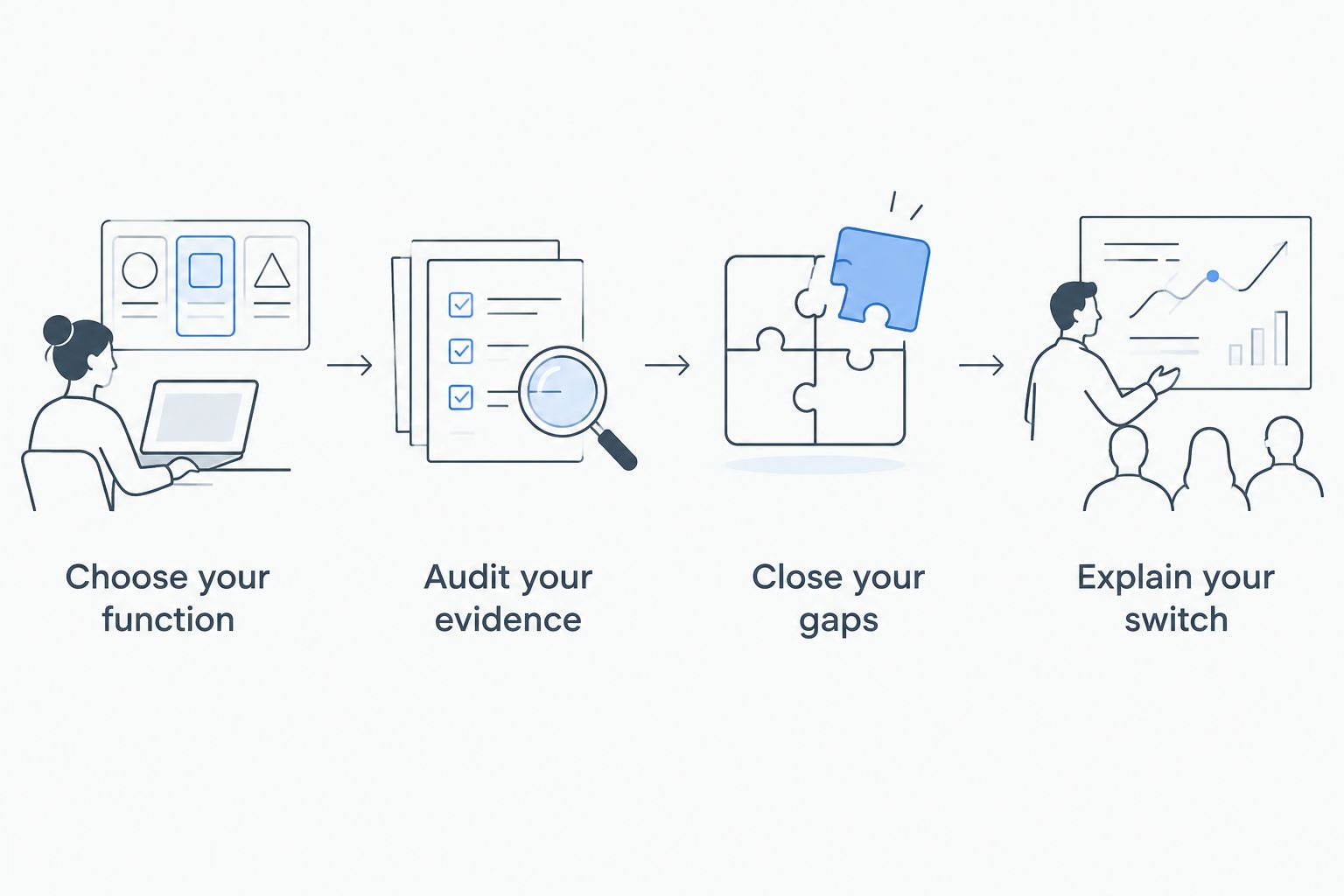
Start with three decisions: your function, your evidence, and your preparation gap. Do not begin with a spreadsheet of famous employers.
- Choose your function: Select research, trading, or development as your primary target.
- Audit your evidence: Match previous work to the responsibilities in a specific role description.
- Close your gaps: Practice the skills the position requires, not every topic associated with quantitative finance.
- Explain your switch: Connect your previous work to the new responsibilities without pretending the jobs are identical.
This sequence keeps preparation attached to the application. It also exposes a weak target before you invest heavily in it.
Set aside 60 minutes for your first role-fit audit. Compare 2 role descriptions and prepare 3 project explanations: one about technical depth, one about uncertainty, and one about a mistake you corrected. These are preparation recommendations, not employer requirements.
QuantMinds is best for career changers seeking resume review, interview prep, and individual quant finance coaching. Coaching helps you work on the application and preparation; it does not replace the technical evidence an employer evaluates.
Clarify your quant career switch
Review your target role, resume evidence, and interview preparation needs.
Which prop trading firm should you choose?
Start with Jane Street if you need a broad quantitative reference point; start with Hudson River Trading if software engineering is already your strongest case. Choose Optiver for an options-market-making focus, Susquehanna for decision-making interests, IMC for a defined trading-and-technology profile, and DRW for a specific market connection.
For prop trading jobs in 2026, the default recommendation is not to apply everywhere. Choose a function, find matching positions, and make your strongest evidence easy to assess. QuantMinds quant finance career coaching belongs in that preparation process—not in your employer ranking.
FAQ
What's the best prop trading firm for a career changer?
The best fit depends on your target role and demonstrable skills. Jane Street is a broad quantitative starting point, while Hudson River Trading is a relevant engineering-first target; neither is a claim of easier entry.
Can I get prop trading jobs without a finance background?
A finance background is not the only relevant background for prop trading jobs. Mathematical research and software engineering can be relevant, but you must check the specific position's requirements and demonstrate the required skills.
Should a software engineer apply for trading or development roles?
Start with development roles if production software is your strongest evidence. Apply for trading roles only when you can also demonstrate the quantitative reasoning and decision-making the position requires.
Do I need a PhD to switch into prop trading?
A PhD is not a universal requirement across prop trading roles. Research, trading, and engineering positions have different requirements, so check the actual role rather than treating the firm's name as a qualification rule.
Does poker experience help with a Susquehanna application?
Poker experience can supply examples of decisions under uncertainty, but it is not sufficient qualification for a trading role. Explain the reasoning behind your decisions and separately demonstrate the position's technical requirements.
Should I get an MFE before applying to prop trading firms?
An MFE is not automatically the right next step for every career changer. Compare your current skills with target roles first, then assess whether a degree addresses the gaps you actually need to close.
Is QuantMinds a prop trading firm?
QuantMinds is a career coaching firm, not a prop trading employer. It provides resume review, interview prep, and individual coaching for professionals and students pursuing quantitative finance roles.
One last thing
Your career-change story should explain continuity, not reinvention. Keep the technical substance of your previous work and remove the language that makes its relevance hard to see. Before submitting, ask yourself: can I defend every claim on this resume through a detailed example? If not, rewrite the claim or build the missing evidence.