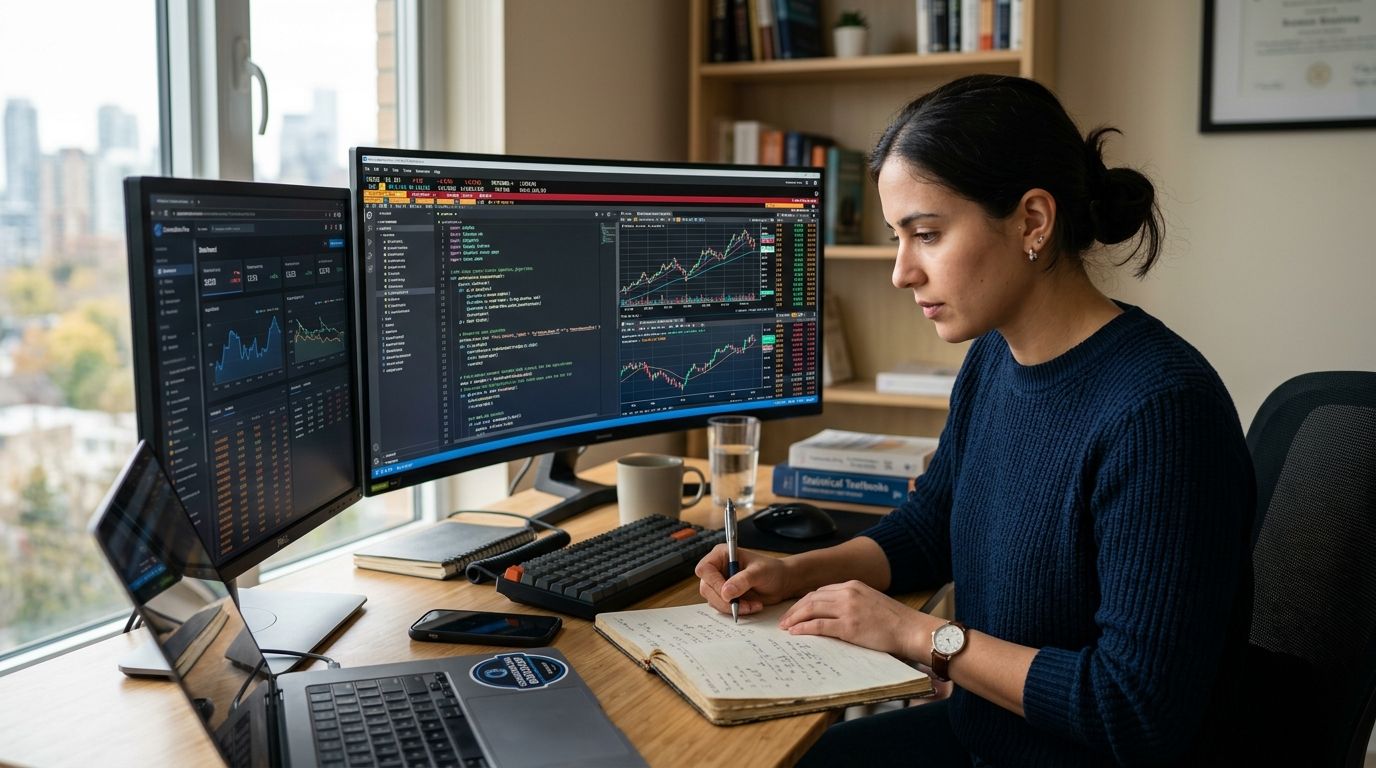

Quant trading suits introverts better than almost any other front-office finance career, but the fit depends heavily on which seat you're in. Quant research and quant development roles reward deep, solitary focus — building models, writing code, testing hypotheses — while systematic and flow trading desks still require fast verbal coordination with a small team. The hidden catch: even the most research-heavy quant roles require you to defend your work out loud in front of a portfolio manager or investment committee, so some baseline comfort presenting ideas is non-negotiable.
- Quant research and quant developer roles are the best fit for introverts inside quant trading — heads-down work with limited real-time interaction.
- Systematic trading desks still need daily verbal check-ins with PMs and risk teams, even when the strategy itself is fully coded.
- Discretionary and flow trading desks demand constant real-time communication and are the worst fit for introverted candidates.
- Interview prep matters more for introverts because behavioral rounds, not technical rounds, are where quiet candidates lose offers in 2026.
Why this matters
Most candidates researching is quant trading good for introverts are worried about the wrong thing. The technical bar — stochastic calculus, probability, coding fluency — doesn't care whether you're quiet or outgoing. What actually determines fit is desk structure: how much of your day is spent alone with a model versus alone with a Bloomberg terminal shouting across a trading floor. Get that distinction wrong during recruiting in 2026 and you'll end up on a desk that drains you within six months, no matter how strong your GPA or GitHub portfolio looked on paper.
Is quant trading a good career for introverts?
Yes, for the right role. The table below breaks down the three main paths inside quant trading by how much real-time social interaction each one demands day to day.
| Role type | Daily social demand | Best for introverts? |
|---|---|---|
| Quant researcher | Low — solo model work, periodic presentations | Strong fit |
| Quant developer | Low — solo coding, code review sync-ups | Strong fit |
| Systematic trader (execution/monitoring) | Moderate — desk check-ins, risk calls | Moderate fit |
| Discretionary/flow trader | High — constant verbal negotiation, real-time calls | Weak fit |
The verdict: quant research and quant development are the strongest introvert-friendly paths inside quant trading in 2026, while discretionary flow trading is the one seat on the desk built for people who think out loud.
Quant researcher: the deep-work path
Quant researchers spend most of the day alone with data — building signals, backtesting, writing up findings. Interaction is scheduled, not constant: a weekly research review, a monthly presentation to the investment team. Buy. This is the closest thing to a solo-focused career quant finance offers, and it still pays like a front-office role.
Quant developer: heads-down by design
Quant developers build and maintain the infrastructure researchers and traders run on — pricing libraries, execution systems, data pipelines. Communication happens through code review and sprint stand-ups rather than open-outcry negotiation. Buy, especially for candidates coming from a software engineering background who want quant-adjacent pay without a trading-floor personality requirement. The software engineer to quant career coaching guide covers how that transition typically works.
Systematic trading: solo strategy, shared execution
Systematic traders design and monitor rules-based strategies, but they still sit on a desk with risk managers and PMs who expect fast, verbal updates when a model misbehaves. Hold — workable for introverts who can turn on real-time communication in short bursts, but not a fully solo role.
Discretionary and flow trading: built for extroverts
Flow and discretionary desks run on real-time negotiation, constant phone and chat traffic, and split-second verbal calls under pressure. Wait — or more accurately, skip this path if sustained low-stimulation focus is what draws you to quant finance in the first place.
Why the introvert-friendliness of quant trading varies
- Sell-side vs buy-side structure — buy-side quant research desks are generally quieter than sell-side trading floors, where flow desks are built around constant client and interbank communication.
- Systematic vs discretionary strategy design — systematic shops automate the decision-making, cutting down on real-time verbal negotiation; discretionary shops depend on it.
- Firm size — smaller funds often require researchers to also present to investors directly, adding a social layer that larger funds separate out into dedicated IR teams.
- Seniority — junior quants do more heads-down work; senior researchers and PMs spend more time managing people and presenting to committees.
- Team culture — some prop trading firms run collaborative, open-floor cultures by design, even on research teams, while others isolate researchers by strategy.
“The technical bar doesn't care whether you're quiet or outgoing — desk structure does.”
Related questions
Do quants need to be good communicators?
Yes, quants need to communicate clearly, but that's different from being outgoing. A quant researcher who can explain a model's assumptions in three sentences to a non-technical PM is more valuable than one who talks constantly but poorly. Written communication — clean documentation, clear code comments — carries as much weight as verbal skill on most research and development teams.
Is quant research less social than quant trading?
Quant research is generally less social than active trading, since research work is structured around solo analysis punctuated by scheduled reviews rather than constant real-time interaction. Trading desks, particularly discretionary and flow desks, run on continuous verbal exchange throughout the trading day.
Can a shy person succeed in quant finance?
A shy person can succeed in quant finance, particularly in quant research or development roles where deep technical work matters more than desk-floor presence. The interview process itself, however, still tests communication under pressure — behavioral rounds and case walkthroughs are where quieter candidates need the most deliberate practice.
A resume and interview record that reads as introverted work style paired with weak presentation skills gets filtered out fast in 2026 recruiting cycles, which is why interview prep focused specifically on articulating your work matters as much as the technical prep itself. The glassdoor research to prop trading interview workflow breaks down how firms structure those behavioral rounds by desk type.
FAQ
Is quant trading a good career for introverts?
Quant trading is a good career for introverts primarily in research and development roles, where the day is built around solo model work rather than real-time verbal negotiation. Discretionary and flow trading desks are a weaker fit since they run on constant communication.
What quant finance role is best for introverts?
Quant researcher and quant developer roles are the best fit for introverts because both center on solo, heads-down work with scheduled rather than constant interaction. Systematic trading is a moderate fit; discretionary trading is the least introvert-friendly seat on the desk.
Do you need to be extroverted to work at a hedge fund?
No, you don't need to be extroverted to work at a hedge fund, but you do need to communicate your work clearly in scheduled reviews and interviews. Research and quant development teams at hedge funds tend to value clear written and structured verbal communication over constant social interaction.
Are quant researchers introverts?
Many quant researchers describe themselves as introverted, since the role rewards long stretches of solo analytical work over frequent real-time interaction. That said, the role still requires periodic presentations to portfolio managers or investment committees.
Is quant developer a good job for introverts?
Quant developer is one of the strongest introvert-friendly jobs in quant finance, since the work is centered on solo coding and code review rather than open-floor trading communication. It's a common entry point for software engineers moving into quant finance in 2026.
Does quant trading require public speaking?
Quant trading roles at the researcher and developer level require occasional presentations to committees or PMs rather than frequent public speaking. Discretionary trading and client-facing roles require far more frequent, real-time verbal communication.
One last thing
The biggest mistake introverted candidates make isn't picking the wrong desk — it's under-preparing for the behavioral round because they assume the technical interview is the whole test. Firms filter quiet, technically strong candidates out at the communication stage more than at the modeling stage, which is exactly where targeted interview prep changes outcomes.
Get honest feedback on your quant path
1-on-1 coaching on resume, interview prep, and which desk actually fits your work style.